In a lesson by Ian Bremmer, he emphasizes the importance of recognizing paradigm shifts in our work lives, encouraging us to challenge traditional mental models and engage with diverse perspectives, particularly as the digital world increasingly influences international relations and everyday interactions.

To achieve a well-rounded understanding of current events, political scientist Ian Bremmer advises diversifying news sources with curious and impartial perspectives, encouraging consumers to engage with global viewpoints while being mindful of the motivations behind corporate media.
As generative AI transforms society, leaders must model responsible use by fostering collaboration, setting realistic guidelines, encouraging exploration, creating a cooperative culture, ensuring data privacy, and demonstrating effective AI practices to guide their teams.
Generative AI can enhance learning by providing context-rich explanations, examples, and feedback, similar to effective teaching methods, as demonstrated by Professor Ethan Mollick in his video lesson on utilizing AI as a tutor.
In this video lesson, Professor Ethan Mollick discusses how incorporating AI as a brainstorming partner can enhance creativity by generating unconventional ideas, encouraging high-variance thinking, and ultimately revolutionizing the innovation process.
In this video lesson, Professor Ethan Mollick discusses navigating the unpredictable nature of large language models, emphasizing the importance of understanding their limitations, managing potential misinformation, and continuously updating one’s knowledge of AI’s evolving capabilities.
In a video lesson, Professor Ethan Mollick emphasizes that providing clear, step-by-step instructions and engaging interactively with AI can significantly improve its output quality, akin to training an intern, while also advising on the strategic timing of AI consultation.
Professor Ethan Mollick compares centaurs and cyborgs to illustrate how to effectively integrate generative AI into work, suggesting a clear division of tasks in the Centaur Model or a blended approach in the Cyborg Model to enhance performance and innovation.
In a video lesson, Professor Ethan Mollick outlines how to effectively integrate generative AI into your workflow, emphasizing the importance of human oversight, contextual guidance, and the proactive exploration of AI’s capabilities while remaining aware of its limitations.
In late 2022, ChatGPT popularized “generative artificial intelligence,” which encompasses large language models capable of producing diverse outputs, prompting Professor Ethan Mollick to explore their implications and how we can effectively coexist and thrive with this transformative technology.
Ethan Mollick highlights the importance of recognizing our agency in shaping artificial intelligence’s future, urging us to balance its potential benefits and risks while ensuring it enhances human flourishing rather than succumbing to polarized narratives.
As generative AI sparks diverse opinions on its implications for humanity, Ethan Mollick suggests we shift our focus to understanding AI’s capabilities and potential applications, emphasizing experimentation to enhance our skills and foster a responsible partnership with technology.
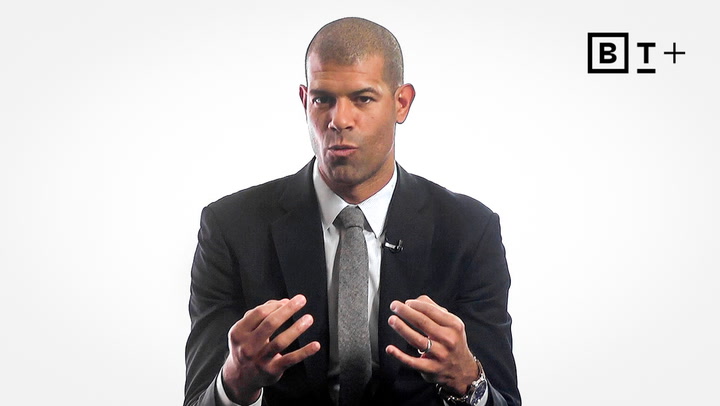
In this lesson, two-time NBA champion Shane Battier discusses how advanced basketball analytics shaped his game strategy, emphasizing the importance of understanding performance metrics and time allocation for gaining a competitive advantage, applicable across various professions.
Machine-learning consultant Eric King cautions against exaggerating AI’s capabilities, while predictive AI expert Eric Siegel emphasizes that successful AI pitches should prioritize concrete business value, focus on deployment goals, and engage stakeholders through impactful demonstrations rather than just technology details.
Generative AI tools like ChatGPT are currently in a boom phase, but predictive analytics expert Eric Siegel warns that mismanaged expectations could lead to another “AI winter,” emphasizing the need for healthy skepticism and a focus on concrete value in AI projects.
Predictive analytics expert Eric Siegel highlights that algorithms, often trained on flawed human data, can perpetuate biases, influencing critical decisions like resource access, and emphasizes the need for awareness and responsible practices to mitigate these social justice risks.
The quote “There are lies, damn lies, and statistics” highlights how data manipulation can mislead, particularly in machine learning, where predictive expert Eric Siegel argues that “lift” is a more effective metric than accuracy for evaluating model performance.
Predictive analytics expert Eric Siegel emphasizes that successful machine learning projects require a strong foundation in business goals and collaboration between data scientists and stakeholders, advocating for his bizML framework to ensure effective deployment and continuous model improvement.
Predictive analytics expert Eric Siegel emphasizes that successful machine learning projects require alignment between business stakeholders and data scientists, urging both sides to bridge their knowledge gaps to enhance project deployment and operational improvements.
Machine learning, a branch of artificial intelligence, transforms raw data into predictive models that drive business decisions, exemplified by UPS’s use of predictive analytics to optimize delivery routes, saving $350 million annually and reducing emissions.
Generative AI is impressive but overhyped, as experts like Eric Siegel argue that its tendency to hallucinate makes predictive AI a more reliable choice for automating large-scale operations.
Despite the current excitement around generative AI, Eric Siegel highlights that machine learning has been effectively utilized in business since the mid-80s, emphasizing the importance of aligning technology with business goals to enhance efficiency and customer experience.
Charlene Li highlights Pope Francis as a model of engaged leadership, using social media to connect with ordinary Catholics and embodying confidence, humility, and a genuine desire to serve, encouraging leaders to bridge power gaps and engage authentically with their audiences.
Engaging stakeholders through two-way dialogue is crucial for effective leadership, as demonstrated by a CEO who used Twitter for public interaction, highlighting transparency while also necessitating careful planning to avoid potential PR pitfalls.
Broadcasting information often neglects audience needs, while effective sharing involves listening and aligning with common goals, as demonstrated by Cisco leaders who use technology to foster relationships and communicate authentically.
Charlene Li emphasizes the importance of strategically using social media and big data to listen to key audiences in real-time, while also cautioning against the risks of overwhelming information, and suggests focusing on trusted filters to enhance communication and innovation.
Charlene Li defines an engaged leader in the 21st century as someone who effectively utilizes digital and social media to foster relationships that align with their top priorities, emphasizing the importance of listening, sharing, and engaging to achieve key objectives.
Charlene Li emphasizes that instead of mastering specific social media tools, leaders should prioritize engaging their audience through strategic listening, informed priority-setting, and effective communication, as social media platforms will continue to evolve.
Arianna Huffington emphasizes the importance of auditing our lives for wisdom, promoting deep sleep for better decision-making, and communicating thoughtfully while letting go of energy-draining elements to connect with our inner intuition and creativity.
Todd Davis emphasizes that while electronic communication, particularly email, is effective for building relationships, it requires overcommunication to ensure clarity, as tone and emotion can be easily misinterpreted without face-to-face interaction.