Are There Truly Five Stages of Grief?
What’s the Latest Development?
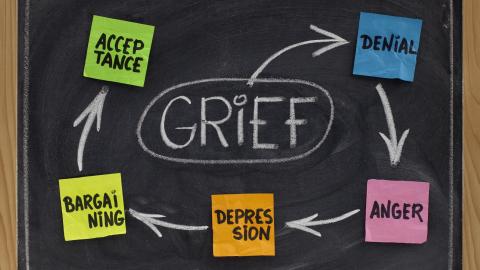
The five stages of grief have become the stuff of pop psychology but disbelief, yearning, anger, depression and acceptance do not always follow each other in an orderly procession. A Yale University study found that acceptance was the strongest emotion throughout, while disbelief was very low. The second strongest emotion throughout was yearning, and depression was more evident than anger at every stage. “Also, emotions did not replace each other in some form of orderly sequence; the highest point of any of those emotions did follow the correct sequence, but a person in the third stage, for example, would still experience acceptance most strongly, not anger.”
What’s the Big Idea?
What can explain the persistence of the grief myth, i.e. that is occurs in five orderly phases? Certainly an emotional map of a traumatic experience provides hope to sufferers that they will eventually come through the pain and feel better again. Ruth David Konigsberg, the author of The Truth About Grief, argues that there is also a harmful side to the myth. “It’s reassuring for people who experience some of the emotions, but it’s stigmatizing for those who don’t. You may feel you’re grieving incorrectly or there’s something wrong with you.”
Photo credit: Shutterstock.com
Read it at BBC Future