Darwin’s Flowers: Unraveling an ‘Abominable Mystery’
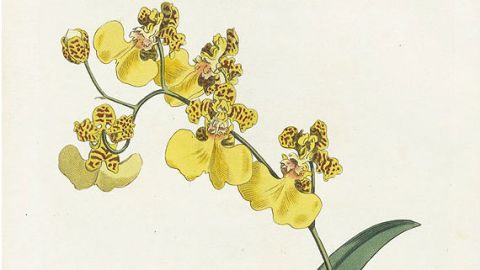
Angiosperms, or flowering plants, drove Darwin crazy. Evolutionary change happens very gradually, Darwin hypothesized, and so it was an “abominable mystery” why so many angiosperm species appeared so suddenly, diversified so rapidly, and became ecologically dominant around 120 million years ago.
Flowers, the reproductive organs of angiosperms, were a novel structure that seemed to have appeared out of nowhere.
The fossil record has grown considerably since Darwin’s time, along with our ability to study molecular data. We know, for instance, that genomes are composed mostly of transposons, pieces of DNA that can “move around the genome,” causing genetic as well as epigenetic changes. Transposons were discovered in plants about sixty years ago by Barbara McClintock who won the Nobel Prize for this discovery. To put it another way, the bulk of the genome is “prepared” for epigenetic change.
In the case of flowers, we believe they are transposon-induced mutations – leaves that were modified to perform a new function. In the video below, professor Rob Martienssen, who leads the plant biology group at Cold Spring Harbor Laboratory, speculates that transposon control is what enabled angiosperms to radiate into thousands and thousands of species.
Watch the video here:
For further reading, Darwin wrote a treatise on orchids.