Skip to content

The Common Character Trait of Geniuses
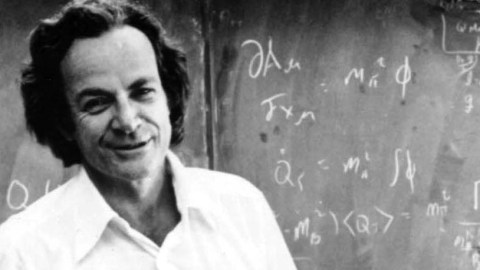
Geniuses like Isaac Newton and Richard Feynman both had the ability to concentrate with a sort of intensity that is hard for mortals to grasp. 
Sign up for Big Think on Substack
The most surprising and impactful new stories delivered to your inbox every week, for free.

James Gleick, who wrote a biography of Isaac Newton, describes the reclusive scientist as “antisocial, unpleasant and bitter.” Newton fought with his friends “as much as with his enemies,” Gleick says. In contrast, Richard Feynman, the subject of another Gleick biography, was “gregarious, funny, a great dancer.” The superficial differences between the men go on and on. “Isaac Newton, I believe, never had sex,” Gleick says. “Richard Feynman, I believe, had plenty.”


So what could these two men possibly have in common? According to Gleick, when it came to making the great discoveries of science, both men were alone in their heads. This also applies to great geniuses like Charles Babbage, Alan Turing and Ada Byron.  “They all had the ability to concentrate with a sort of intensity that is hard for mortals like me to grasp,” Gleick says, “a kind of passion for abstraction that doesn’t lend itself to easy communication.”

Watch the video here:

brightcove.createExperiences();

// ]]>

Image courtesy of Shutterstock

Sign up for Big Think on Substack
The most surprising and impactful new stories delivered to your inbox every week, for free.

Related
The hospital where Rainn Wilson’s wife and son nearly died became his own personal holy site. There, he discovered that the sacred can exist in places we least expect it. During his talk at A Night of Awe and Wonder, he explained how the awe we feel in moments of courage and love is moral beauty — and following it might be the start of our spiritual revolution.
13 min
with

Up Next
NASA’s Nuclear Spectroscopic Telescope Array, or NuSTAR, captured the X-ray glow of a pulsar wind nebula that is shaped like a hand – or at least appears that way as ejected particles interact with nearby magnetic fields.