The Human Side of Particle Physics
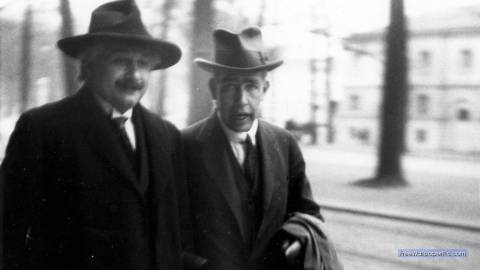
You might think of particle physics as a pursuit but it’s being done by human beings. So we do have interactions and connections with the rest of the world in our lives and make choices that have to do with our environment and people in our lives and historical events and trends.
So it’s not that surprising that physicists would get caught up in something as domineering as a world war. And, in fact, the Second World War was in some ways “The Physicists’ War.” Physicists really did play a major role, especially with the Manhattan Project in developing the weapons that ended up having a decisive effect on the progression of the war.
Given what was happening in the world it’s no surprise that physicists, just like anyone else, would get caught up. Enrico Fermi is a key player in fundamental physics and also in neutrinos. He’s the one who gave the name neutrino – Italian for little neutral one. Many physicists like Fermi left Europe because of anti-Semitism. So historical trends certainly had an effect on how physics as a discipline progressed. These trends affected the lives of many people.
In Their Own Words is recorded in Big Think’s studio.