Skip to content

With Apologies To Mark Twain: There’s Science, Flawed Science, And Skewed Statistics
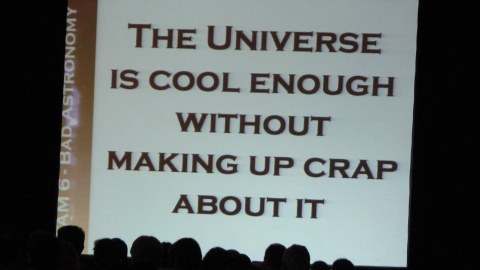
More than ever, there is a need to differentiate bad science from good. 
Sign up for Big Think on Substack
The most surprising and impactful new stories delivered to your inbox every week, for free.


Let’s face it: The lure of what appears to be science is tantalizing when some results of studies give us a shimmering glimpse of something revolutionary or game-changing, especially when it comes to our health.

We desperately want the thing to be true. 

Ben Goldacre is a doctor — now an epidemiologist. It’s a field that studies whether or not something’s actually good for you.

As he demonstrates so clearly in this TED talk, companies are looking to sell us something that we strongly desire to be real (like health fixes, medicines, etc.), so they manipulate the results. Even some researchers looking for additional funding sometimes do the same.

Until I saw this video, I was not aware of just how test results can be skewed, but they frequently are — in ways that are actually quite surprising.

Watch:

Interactive transcript lives here. Thumbnail Creative Commons licensed via Wikimedia Commons.
Sign up for Big Think on Substack
The most surprising and impactful new stories delivered to your inbox every week, for free.

Related
The hospital where Rainn Wilson’s wife and son nearly died became his own personal holy site. There, he discovered that the sacred can exist in places we least expect it. During his talk at A Night of Awe and Wonder, he explained how the awe we feel in moments of courage and love is moral beauty — and following it might be the start of our spiritual revolution.
13 min
with

Up Next
Imagine cancer is no longer an issue, HIV is wiped out, and the signs of aging come on so slowly, one appears young forever. Gene editing promises much. Incurable diseases could become curable, new drugs could be created to battle cancer, and genetic diseases could be corrected. It has potentialities for research too. But we aren’t there yet. And there are lots of pitfalls we need to avoid.