Search
bigthinkeditor

Read Less
A new printing technology is in development that promises to pack between 10 and 30 percent more energy into batteries for electric vehicles helping them to compete with conventional cars.
The world's leading particle accelerator, the Large Hadron Collider, has yet to find any evidence of certain particles that physicists depend on to explain our subatomic world.
Italian inventor Andrea Rossi claims to have developed commercial-ready cold fusion technology that can produce large amounts of energy from dirt-cheap nickel and hydrogen.
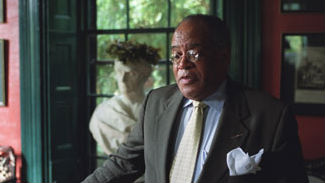
The life of Reverend Peter J. Gomes, a self-described oddity, may appear to be somewhat of an enigma. Rev. Gomes, widely considered one of the country's leading preachers, died Monday at 68. Gomes was a gay black Baptist preacher and a registered Republican. And yet, while these seeming contradictions--notably being Christian and gay--are irreconcilable to some, according to Rev. Gomes, his identity was "reconciled in me by a loving God."
The ego is the part of us that loves power. It is the part that loves to be seen, recognized, praised, and adored. Facebook provides a powerful platform for this.
Technology will make collaboration your next competitive advantage, says Technology Review. But what are the tools that truly help you be more collaborative and productive?
Slate provides what it dubs the American consumer's guide to the Arab democratization movement. Will you still support Arab freedom if gas prices soar?
The Wall Street Journal says European taxpayers deserve clarity on just who benefited from the 'Irish bailout.' "It was the creditors of Ireland's banks."
Struggling to solve a creative problem? Pretend you're doing it for someone else. We're more capable of mental novelty when thinking on behalf of strangers than for ourselves.
Darwin himself struggled to explain the evolution of so intricate an organ as the human eye. But scientists have discovered a worm's eye that may make the job easier.
Was Rolling Stone's psy-ops exclusive a "cautionary tale about people doing something they are not trained for and the media commenting on something they know little to nothing about?"
Comparative cognition expert Laurie Santos' research with capuchin monkeys shows that we both fall prey to the same irrational economic tendencies.
A new 'dementia map' of the UK suggests six out of ten cases go undiagnosed, leaving families without the support they badly need.
Talk to the workers who are hurting most in this epic downturn, and you'll find they are overwhelmingly out there on their own. No one has their back. Which is why unions matter.

Scientists can't definitively say why some cells become cancerous, but an even bigger mystery is why some cancer cells spontaneously regress and even disappear on their own.
Oil markets don’t like surprises. The sudden ousting of Mr. Mubarak and the unrest in Libya, Bahrain, Yemen, Iran and Algeria had added 20% to oil prices by the middle of last week.
Contributing to the uprisings across the Middle East is the suppression of democratic aspirations by authoritarian regimes. Important too is the dangerous state of the region’s economies.rn
From WikiLeaks to Guantanamo Bay, legal challenges present false threats to America's unquestionable military dominance, says University of Chicago law professor Eric Posner.
Oxford professor of economics Paul Collier says the biggest challenge facing Africa today is to reign in corruption during what is sure to be an era of massive resource extraction.
Journalists Sebastian Junger and Tim Hetherington clinched an Oscar nomination for their documentary "Restrepo," in which they show the Afghanistan war through the eyes of soldiers.