Search
bigthinkeditor

Read Less
Washington policy wonks have been grappling with a subject that is more the province of poets and philosophers than bureaucrats: what is the value of a human life?
For many of the questions Watson got right on Jeopardy!, a naive Google query of the 'en.wikipedia.org' domain returned, as the first result, the correct answer.
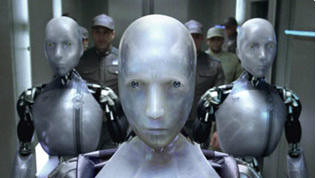
Technology is eating jobs—and not just obvious ones like toll takers and phone operators. Lawyers and doctors are at risk as well. Is your job an endangered species?
The Congressional Budget Office projects that America's 2011 deficit will be $1.5 trillion, or 9.8% of GDP, and debt held by the public in the 2011 fiscal year will approach 70% of GDP.
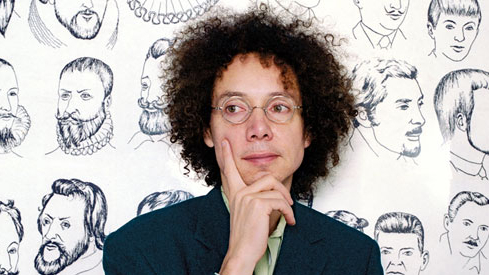
From his many interviews with "minor geniuses," Malcolm Gladwell distills a couple characteristics shared by all successful innovators.

Just how well computers are able to understand language nuance--what researchers call the "Paris Hilton" problem--will determine how far A.I. has come.
For the past four decades, tension between artificial intelligence and intelligence augmentation—A.I. versus I.A.—has been at the heart of progress in computing science.
Do you want to have an affair? Noel Biderman is the chief executive officer of Avid Life Media, based in Toronto. "Monogamy, in my opinion, is a failed experiment," he declares.
By the fall of 1861, Walt Whitman had come to believe he needed to do something for the war effort. His first act was to contribute a patriotic broadside in verse.
Alcohol's sleepy effects have not gone unnoticed. Those who have had a night out drinking may know that booze can deepen nighttime sleep only to wake you up as the sun is rising.
Despite the vast amounts of computing and communication power in corporate hands, companies are only at the early stages of using I.T. to revamp business practices.
There are certain aspects of economic life, such as expensive hotel internet connections, which can only be explained when we grapple with the bounded nature of our brain.
Bill Clinton's labor secretary says President Obama's budget proposal hinges on major cuts that ensure that Republicans get to control the conversation on spending.
Cultural impresario and literary and software agent John Brockman has spent the last half century merging art and science to create what he calls the Third Culture.
The first step to managing your own body language is to forget about your body language and focus on your intent. What do you want to happen? Focus on that first, says Nick Morgan.
The most important thing a leader can do is dream. And dream big. Big ideas and big concepts lead to major change, says Tuck School of Business professor Vijay Govindarajan.

The next big thing that will rock the Internet is machine to machine connectivity (M2M for short), in other words, machines bypassing people in order to connect to the Internet.

In discussing the latest books on technology, The New Yorker's Adam Gopnik derides Clay Shirky's utopian views as "history taken from the back of a cereal box."
David Cameron’s speech is heavy with rhetoric. But if personal responsibility means anything, it is that people must choose to be charitable, not be forced by the state to be so.
Egyptians take note: The months after a revolution can be more dangerous than the revolution itself, warns Anne Applebaum.