Innumeracy (In a Data-Driven Age)
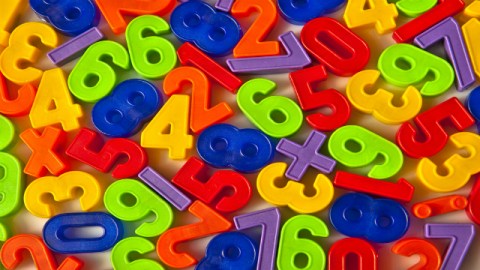
It’s the mathematical equivalent of illiteracy, and it’s surprisingly common among otherwise well-educated people. Douglas R. Hofstadter coined the term ‘innumeracy’ in a Scientific American column two decades ago, and Mathematician John Allen Paulos took up his theme in his 2001 book of the same name.
It would be difficult, if not impossible, to accurately determine whether and to what extent “educated” people today are more innumerate than their counterparts of, say half a century ago, but what is clear is that we live in an age in which mathematical algorithms and data-crunching shape our lives to a greater extent than ever before. From Wall Street’s increasing reliance on mathematical modeling to the nationwide push for increased testing and data-driven school reform to Facebook’s ubiquity as the internet-wide login mechanism, which means that Facebook and the marketers with whom it shares data have an increasingly precise picture of how each of us lives online, our reality is increasingly being mediated by math.
Innumeracy, in a data-driven age, means ceding control and understanding of an substantial chunk of yourself – your online reputation, the scores that colleges and employers use to screen out undesirable candidates – to others. It’s debatable whether we (in the West) are becoming more innumerate than we used to be, but it is clear that the gap between our reliance upon and our understanding of mathematics is widening dramatically.
John Allen Paulos discusses innumeracy on Late Night With David Letterman
Follow Jason Gots (@jgots) on Twitter
Image credit: Shutterstock.com