Search
Derek Beres
Derek Beres is a freelance writer. Based in Portland, Oregon, he has served in senior editorial positions at a number of tech companies and has years of experience in health, science, and music writing. He is the co-host of the Conspirituality podcast and co-author of Conspirituality: How New Age Conspiracies Became a Health Threat.
Read Less

We know that body language reveals a lot. But language is an even bigger tell if you know what to look for.

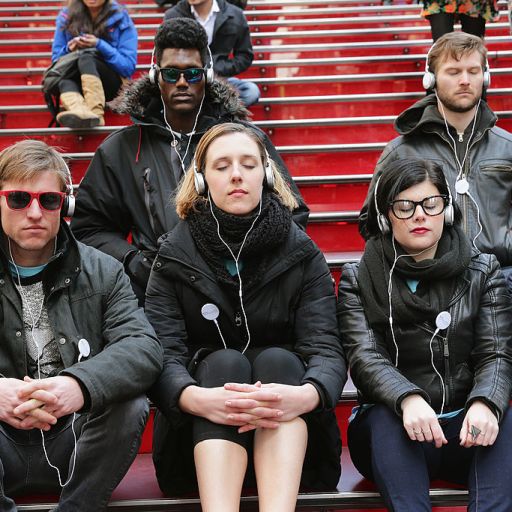
Music is our oldest and most cherished ritual. How we treat it is reflective of who we are.

In The Hacking of the American Mind, Robert Lustig holds up a much needed mirror to our consumption habits.
A supervised learning algorithm can predict clinical depression much earlier and more accurately than trained health professionals.

Lazy but want to stay in shape? You may soon be able to have it both ways, thanks to a new pill in testing from GlaxoSmithKline.

A new study illustrates how marketing affects our memory of what we eat, and how that translates to a bigger waistline.

Two meditation pioneers, Daniel Goleman and Richard J. Davidson, answer that question in their new book, Altered Traits.
Forty percent of Americans sleep less than seven hours per night, and that's a problem.

Researchers at the University of Adelaide found high success rates for lucid dreaming.

The world's human population is skyrocketing, creating more competition and suffering. Yet few thinkers address a solution. Is there one?

American clergy members get a tax break thanks to Code Section 107(2), which allows that “ministers of the gospel” exclude housing allowances from their taxable income.

Early states did not form how we've been taught, writes James C Scott in his new book. His research offers a clue as to where we might be heading.

The link between sugar and cancer just got stronger.
Anxiety is now the number one disorder on the planet. Yet it's oddly ignored from public conversation.

Your mindset can rewind aging, physically and mentally, as these jaw-dropping experiments show.

New research shows how parrots and crows learn new skills through play. Can adults implement this advice?

The benefits of living in urban centers, where populations are more dense, include more accessibility to leisure, health, and safety services, according to a new study out of the UK.

New research at USC shows universal brain activity in the comprehension of stories for the first time.

Technology is allowing us to quantify exercise like never before, but turning activity into a game may be the most successful way to encourage fitness yet.
Our phones often help promote depression and anxiety. These apps are fighting back.