Harold Varmus

Harold Varmus

Director, National Cancer Institute

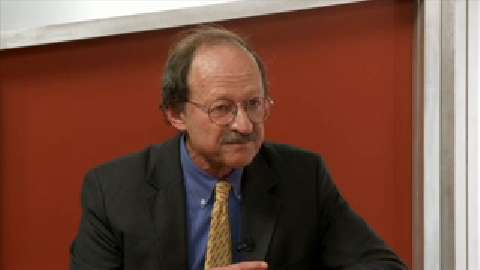
Harold Varmus is an American Nobel Prize-winning scientist and the 14th and current Director of the National Cancer Institute, a post he was appointed to by President Barack Obama. He was a co-recipient (along with J. Michael Bishop) of the 1989 Nobel Prize in Physiology or Medicine for discovery of the cellular origin of retroviral oncogenes. He also serves as one of three co-Chairs of the President's Council of Advisors on Science and Technology.

From 1993 to 1999, he served as Director of the National Institutes of Health. As the NIH director, Varmus was credited with nearly doubling the research agency's budget. From 2000 to 2010, he served as President of Memorial Sloan-Kettering Cancer Center in New York City.

Beginning during his tenure as NIH director, Varmus has been a champion of an open access system for scientific papers, arguing that scientists should have control over the dissemination of their research rather than journal editors.

46mins
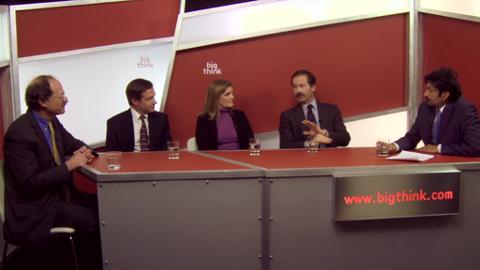
Big Think’s panel discussion highlighting cutting-edge cancer research.
4mins
The previous director of the National Cancer Institute wanted to banish suffering and death from cancer by 2015. Current director Harold Varmus says this claim was not based on reality, […]
3mins
Seemingly every year there are new reports that something we consume or use on a daily basis is carcinogenic. But what exactly does that mean on a biological level?
8mins
The Cancer Genome Atlas project, already several years underway, is transforming the way scientists think about and treat cancer.
7mins
There are some dramatic cases in which cancers have regressed or gone away on their own, which raises the bigger question of why some early cancers progress and others don’t.
4mins
Dr. Harold Varmus: Why do virtually all men over the age of 90 develop some amount of prostate cancer whereas heart cancer is practically unheard of?
5mins
One in three Americans are diagnosed in their lifetime with cancer, a derangement of normal cell growth in which cells grow in antisocial ways, crossing natural tissue boundaries.