Search
Jason Gots
Editor/Creative Producer, Big Think
Jason Gots is a New York-based writer, editor, and podcast producer. For Big Think, he writes (and sometimes illustrates) the blog "Overthinking Everything with Jason Gots" and is the creator and host of the "Think Again" podcast. In previous lives, Jason worked at Random House Children's Books, taught reading and writing to middle schoolers and community college students, co-founded a theatre company (Rorschach, in Washington, D.C.), and wrote roughly two dozen picture books for kids learning English in Seoul, South Korea. He is also the proud father of an incredibly talkative and crafty little kid.
Read Less

For Bruce Finley, the benefits discussion is a major (and often lost) opportunity for companies to reach young workers in a meaningful way, getting them more deeply invested in their careers and their futures.

Big Think's Chief Economist Daniel Altman examines the origins of the Euro Zone and some of the inherent challenges it faces.
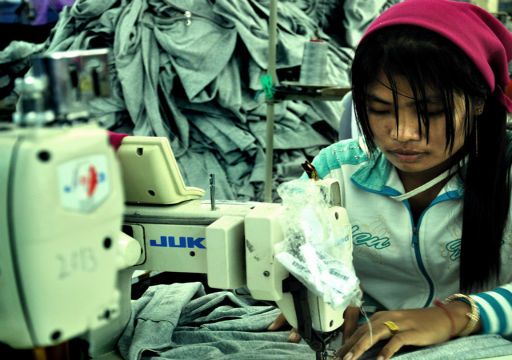
Over-reliance on foreign aid as opposed to tax revenue, says Sophal Ear, a leading expert on post-crisis economies, leads to corruption.
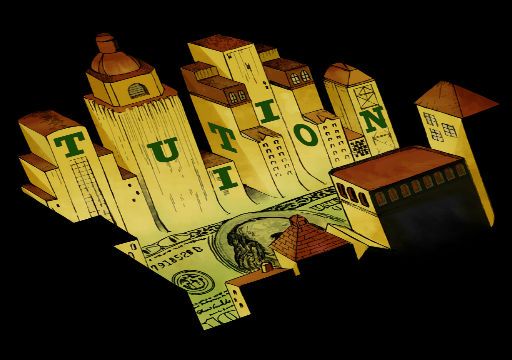
Coming from an upper middle class family, Bruce Bueno de Mesquita says, he could have afforded to pay some college tuition. Instead, he was the beneficiary of the tax dollars of less well-off New Yorkers. He argues that "tuition discrimination" makes private universities a fairer option.

Particle physics. Human self-determination. Evolution. According to Renaissance scholar Stephen Greenblatt, we owe these modern ideas to an ancient Roman poem, rediscovered in 1417.

In addition to demotivating talented workers, an opaque and dictatorial leadership style can silence innovation from below, leaving the leader in charge of coming up with all the great ideas.

The Family Meal, Ferran Adrià's new cookbook, gathers thirty-one three-course meals that the chef created for nightly staff dinners at El Bulli.

Bruce Bueno de Mesquita sees key messages of Occupy Wall Street and the Tea Party movement – as two misguided responses to the powerlessness many Americans feel.

Photo Credit: Jennifer Dessinger Adam Gopnik calls Jonathon Keats “a poet of ideas, whose work always rests on a solid basis of scientific research and resolves in a startling, semi-serious […]

According to Princeton Neuroscientist Sam Wang, co-author with Sandra Aamodt of Welcome to Your Child’s Brain, the benefits of bilingualism go far beyond the ability to order convincingly at Maxim’s in Paris, or to read Dostoevsky in the original.

What’s the Big Idea? For some of us, it was Spock. For others, a humiliating performance as a pilgrim in the kindergarten musical. For me, it was William Blake’s relentless […]

Psychologist Dan Ariely says Zappos' policy of offering potential customer service employees $3000 not to take the job is money well spent.
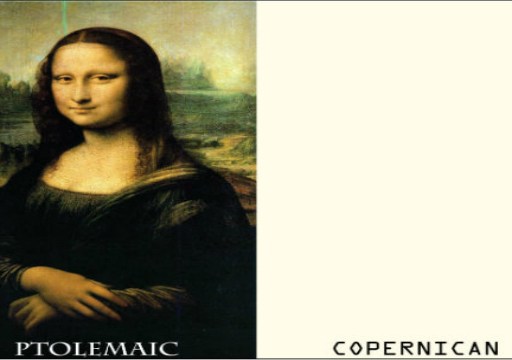
For almost 2000 years, Western Art has groped about in the darkness, laboring under the Ptolemaic misconception that Earth (and humankind) is at the center of all things. Until now.

Making art, says Singer-Songwriter Josh Ritter, is half of the artist’s job. The rest is hustling on its behalf – making sure the world hears it. (Exclusive, in-studio performance at the end of the article)

In his new book, 1493, Charles Mann gives us a rich, nuanced account of how the Columbian Exchange continues to reunite the continents and globalize the world.

Want to build a strong and sustainable business, political movement, or religion? According to John Mackey, co-founder and CEO of Whole Foods Market, the wise leader follows the example of one of the most ancient cultures on Earth: yogurt.

Tensions between Millennials and their employers are often classic power struggles that misleadingly manifest as an intergenerational culture clash.
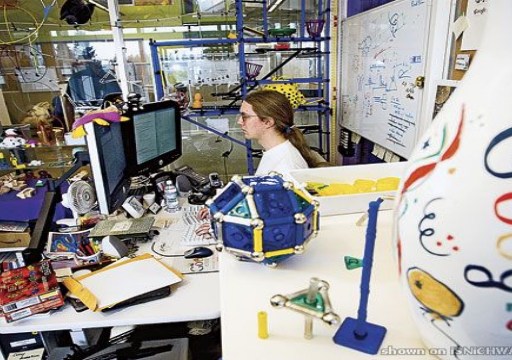
According to psychologist Dan Ariely, Google’s policy of giving employees free reign over 20% of their work week – one full day out of five – makes for happier, more passionate workers and a better, more creative company.

Economist Daniel Altman predicts that "deep factors," including endemic corruption and a Confucian business culture, will limit China's growth, causing it to surrender the top spot shortly after becoming the world's biggest economy.
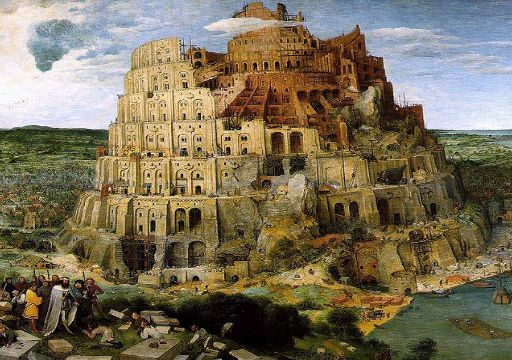
Steven Pinker is a cognitive psychologist interested in language as a window into the human mind. In this excerpt from his linguistics lecture for the Floating University, he illuminates some of the mysteries surrounding children’s hardwired ability to learn language.