Search
Jonny Thomson

Jonny Thomson taught philosophy in Oxford for more than a decade before turning to writing full-time. He’s a columnist at Big Think and is the award-winning, bestselling author of three books that have been translated into 22 languages.
Jonny is also the founder of Mini Philosophy, a social network of around two million curious, intelligent minds. He's known all over the world for making philosophy accessible, relatable, and fun.
Read Less

Communication with home will be difficult on long-haul space flights. The longer this isolation goes on, the more detached a crew becomes.

Are we really only a moment away from "The Singularity," a technological epoch that will usher in a new era in human evolution?

Truth needs us to define the rules, grammar, and criteria for true statements. But can we do this within language itself?

The most momentous and significant events in our lives are the ones we do not see coming. Life is defined by the unforeseen.

A recent study illuminated surprising differences in how men and women seek help when struggling with relationships.

The ability to differentiate your emotions might make you less likely to suffer from depression, alcoholism, and anger issues.

Frank Herbert's "Dune" refers to a religious desert people who are desperate for a savior to overthrow an evil empire. Sound familiar?

How we handle grief largely depends on our worldview. Here is how three famous philosophers handled the certainty of grief and despair.

All religions have totems, rites, and taboos that are considered "sacred." Émile Durkheim believed society is largely underpinned by them.

We are more likely to agree with someone who also agrees with us. Young children, though, only trust themselves. We have to learn to trust.

Dave Eggers book, "The Circle," uses satire to illuminate how privacy is fast becoming a lost virtue in the digital age.

Linguistic laws are remarkably versatile and have applications in ecology, microbiology, epidemiology, demographics, and geography.

Great genius is not born of lightning bolt-like moments of inspiration. In reality, perseverance plays the biggest role.

It's better to pursue moral actions instead of the ephemeral state of happiness, according to the philosopher Immanuel Kant.
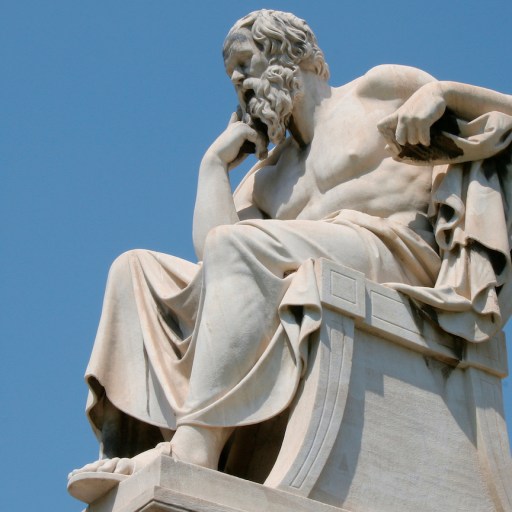
We all employ heuristics to help us deal with the world. But when we make a hasty generalization, we risk making a big error in our thinking.

Studio Ghibli movies celebrate the natural world using a very Japanese mixture of Shinto, Buddhist, and Daoist themes.

Stoicism says that we should change what we can, endure what we must. The company we keep is something we can, and often should, change.

In a world without "bullshit jobs," we would have more hours available to us to learn new skills and to unleash our creative side.

Jains believe that karma weighs the soul down. This can be overcome through extreme asceticism, in which one slowly withdraws from life.

To enable us to read, the brain piggybacks on other cognitive processes.