Search
Kecia Lynn
Kecia Lynn has worked as a technical writer, editor, software developer, arts administrator, summer camp director, and television host. A graduate of Case Western Reserve University and the Iowa Writers' Workshop, she is currently living in Iowa City and working on her first novel.
Read Less

Researchers have been studying the social, ecological, and economic factors behind what they say is the "homogenization" of American lawns...and "keeping up appearances" is only one of them.
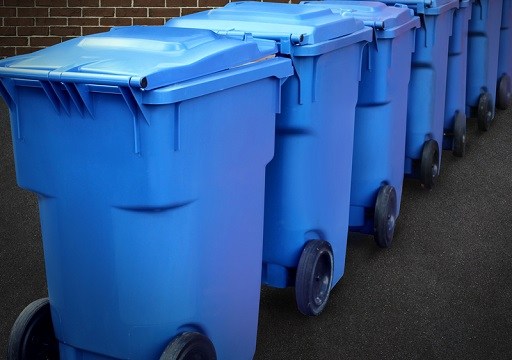
The same company that installed bins with digital ad screens during the 2012 London Olympics has now added a gadget to some of them that can track smartphones, eventually allowing for more targeted sales pitches.

A system currently being tested on European flights uses a short-wave ultraviolet laser to detect air density fluctuations that could signal a pocket of turbulence ahead.

Like the Raspberry Pi, Columbia University professor Shree Nayar's device helps kids learn the basics of hardware design, and he also plans to donate some to underprivileged communities.

For other subjects, an app that allows teachers to create, analyze and grade assignments online, and provides students with instant feedback on their work, may seem like no big deal. For music theory, it's a big deal.

A trap created by Rutgers University scientists that resembles an overturned plastic dog food bowl caught many more bedbugs than a similar, shallower trap. The addition of special chemical lures made them even more effective.

Reports of hearing meteors as they passed overheard were largely dismissed until about 20 years ago, when a scientist proved that very low-frequency radio waves could be picked up by certain objects, such as wire-rimmed glasses.

To coincide with the Discovery Channel's annual "Shark Week" series, Nova Southeastern University has launched a Web site that allows visitors to follow specially-tagged sharks as they swim around the world.
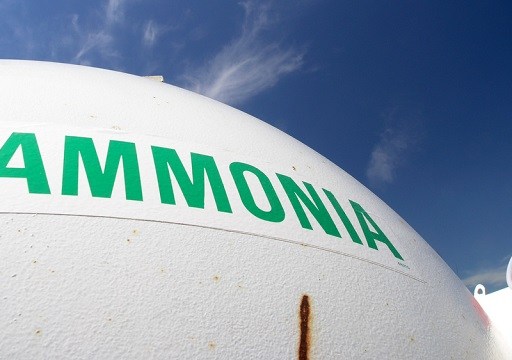
An engineer has developed a process that will produce ammonia more cleanly and possibly in enough amounts to provide an alternative energy source.

A new study warns that the rock that landed near Chelyabinsk in February may be part of a larger group of asteroid remnants, all with orbits that could potentially lead them to Earth.

The government announced the closing of the country's two public zoos in July, with many of their residents moving to private centers. However, a separate law passed in December means those centers don't have a lot of vacancies.

An Australian man's newly-launched campaign is the latest effort to address the phenomenon of people paying more attention to their phone than to other people around them.

As of today (Aug. 6), the site's Art Store offers over 40,000 works of original and limited-edition art from more than 150 galleries and dealers. Prices range from hundreds of dollars to millions of dollars.

Or, more specifically, stomach complaints: nEmesis monitors diners' Twitter accounts for certain words that might indicate a potential food poisoning issue. Tests showed its findings closely matched those of health inspectors.

A team from Tokyo's University of Electro-Communications has created a system that creates an interactive surface from a tub of opaque water, basically "[taking] immersive entertainment to a whole new level."

A Finnish team made crowdsourcing a literal public affair by setting up large touchscreens in busy areas and watching passersby as they performed basic research tasks with them. The results were on par with those of paid online volunteers.

A Gallup poll released this week shows that the 20-point gap between the two, first noted in 1992, has now closed. Meanwhile, the number of hard liquor drinkers has remained more or less steady.

San Francisco-based Relay Rides is unveiling their program this month at San Francisco International Airport and, by doing so, launching a salvo at traditional car rental companies.

In a recent survey, nearly all respondents admitted to performing personal tasks, both on- and offline, during the work day. More managers are fine with it, partially because they're doing it too.

Yes, say Michigan Tech researchers, who compared the costs of purchasing certain common inexpensive household items against the costs of printing them at home. The savings was significant.