Search
Kecia Lynn
Kecia Lynn has worked as a technical writer, editor, software developer, arts administrator, summer camp director, and television host. A graduate of Case Western Reserve University and the Iowa Writers' Workshop, she is currently living in Iowa City and working on her first novel.
Read Less

Although the agency refuses to confirm it, the CIA is helping to fund a study that will determine how and whether tinkering with the climate could impact national health, not to mention security.
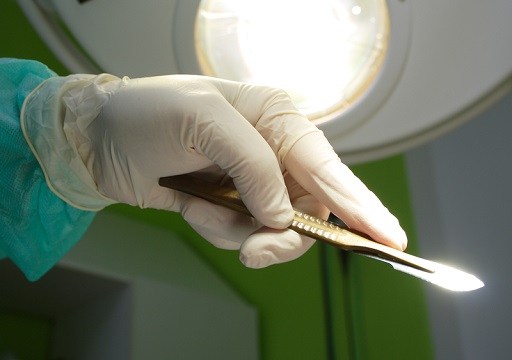
Dubbed the "iKnife," it's connected to a mass spectrometer, which identifies certain chemical signatures that are then compared against an online database.
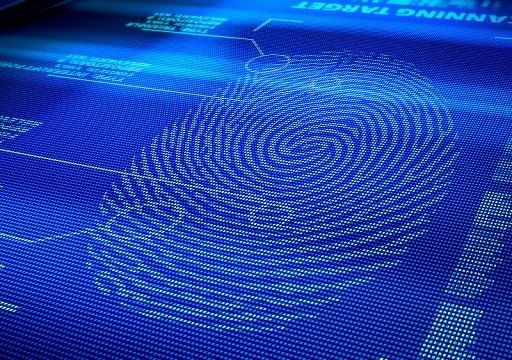
By combining an optical fiber screen with a projector and an infrared camera, a team of researchers created a display that could be used for secure e-document handling, among other tasks.

A Latvian designer has created a urinal that includes a shallow sink built into the top. It's economical too: When the person washes his hands, the water used rinses the urinal basin as well.

At a recent convention in London, manufacturers displayed prototypes of next-generation machines "that had the look, and feel, of oversized smartphones or tablet computers."
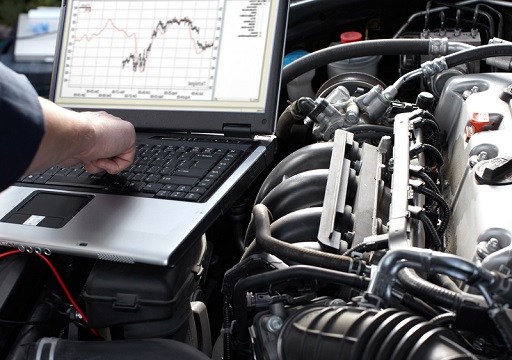
At the Black Hat security conference later this month, two Spanish engineers plan to demonstrate a $25 gadget that can take over a car's electronics.

One closely-debated theory has been that heavy metals were a byproduct of collisions between dense dead stars. Now, an event observed through NASA's Swift satellite may have provided a literal "smoking gun."

By using a new method of crystallization, inventor Michael Graetzel says that the cells' power conversion efficiency has shot up to 15 percent, putting them on a par with traditional silicon photovoltaics.

Bacteria stored in a fuel cell broke down chemicals in urine, generating enough electricity in the process to enable text messaging, Internet browsing, and "a brief phone call."

The 23-year-old space telescope may be a few years away from retirement, but its eye is still good: The newly discovered 14th moon is only 12 miles in diameter.

Scientists are growing more confident that Jupiter's moon could harbor life. The problem: Getting through its thick ice crust to the watery ocean beneath.

A team of students from Exeter University won first prize in innovation at the Imagine Cup competition with an app that turns a room full of smartphones into a stereo system.

Tech research firm Gartner has coined the phrase "citizen developer" to describe the growing number of programmers whose skills came from outside the university environment.

Now with more than 3,000 subscribers from across the US and Canada, Call in the Night "attempts to wake people mid-dream so they can be recorded talking about what was happening during their REM cycle."

League of Legends developer Riot Games has successfully convinced the government to offer players the same kind of visa normally given to athletes to allow them to compete in American tournaments.

Maybe it's time for a DIY rethink: Nathan Broadbent's "Raspberry Picrowave" accepts voice commands, emits custom sounds, can cook food via a product barcode scan, and can be controlled via a browser or mobile app.

Later this year, transportation officials plan to set aside one "singles" car on its trains for a fixed amount of time each week...and yes, they're doing it to help busy people find mates.

A small village in Spain reports that incidences of uncollected dog waste have dropped by 70 percent ever since offenders began receiving deliveries of their dogs' leftovers.
Verizon says it doesn't want to replace copper-wire lines damaged during last year's Superstorm Sandy, and AT&T hopes to turn off its entire landline network by 2020.
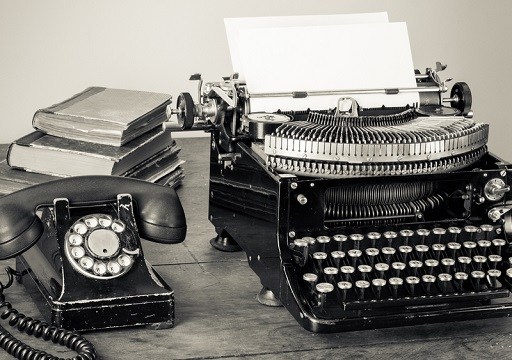
The Russian intelligence service has put in an order for typewriters and ribbons in hopes of avoiding Edward Snowden-type digital leaks. Writer Marc Herman notes that for the rest of us, this approach won't make much difference.