Ray Kurzweil

Ray Kurzweil

Co-Founder & Chancellor, Singularity University

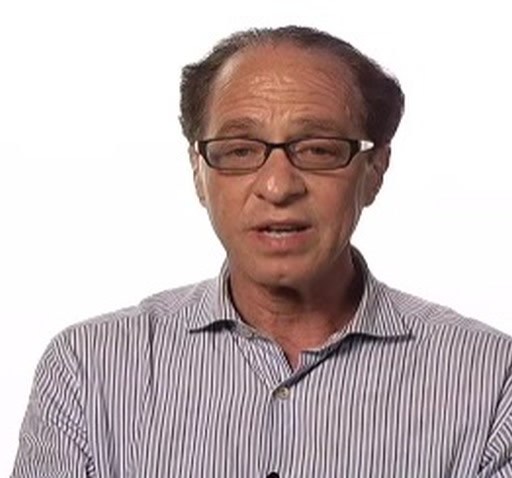
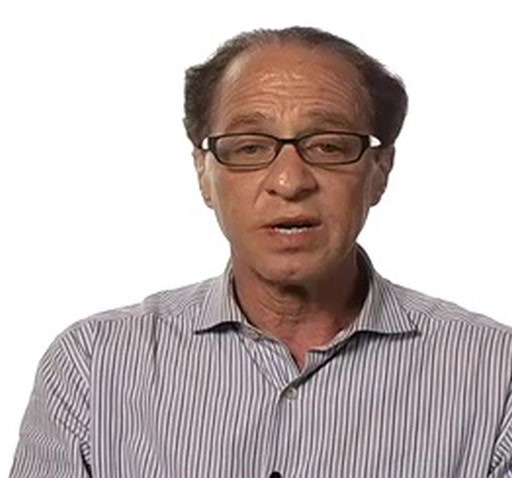
A person with short brown hair wearing a blue checkered shirt, smiling slightly against a plain white background.

Ray Kurzweil is a world class inventor, thinker, and futurist, with a 35-year track record of accurate predictions. He was the principal inventor of the first CCD flat-bed scanner, the first omni-font optical character recognition, the first print-to-speech reading machine for the blind, the first text-to-speech synthesizer, and many more. For these achievements, he was selected as one of the top entrepreneurs by Inc. magazine, which described him as the “rightful heir to Thomas Edison.”

Ray has received a Grammy Award for outstanding achievements in music technology. He is also the recipient of the National Medal of Technology, was inducted into the National Inventors Hall of Fame, and holds honors from three US presidents. Ray has written five national best-selling books including The Singularity Is Near (2005) and How to Create a Mind (2012). He is also a principal researcher and AI visionary at Google, looking at the long-term implications of technology and society

1mins
Technologist and futurist Ray Kurzweil says our brains, as complex as they are, are constrained by an upper limit of 300 million “pattern recognizers.” But our future, cloud-based “virtual brains” will have no such constraints.
1mins
In our most recent discussion with Ray, he discusses the ability of natural language machines, such as IBM's Jeopardy!-slaying computer named Watson, to overleap our own cognitive abilities. The result, he says, will be a computerized personal assistant to help us throughout the day.
3mins
Your computer will be an assistant that helps you through the day, will answer your questions before you ask them or even before you realize you have a question
2mins
Ray Kurzweil is the author of the book How to Create a Mind. The first question we have for him is “why create a mind?”
2mins
The basic technologies to enable us to look inside the brain and see its functioning are growing exponentially. And they're at a point now where we can actually see individual interneural connections forming and firing.
1mins
Ray Kurzweil has developed six epochs for stages in the evolution of information.
1mins
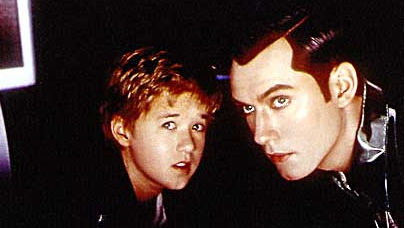
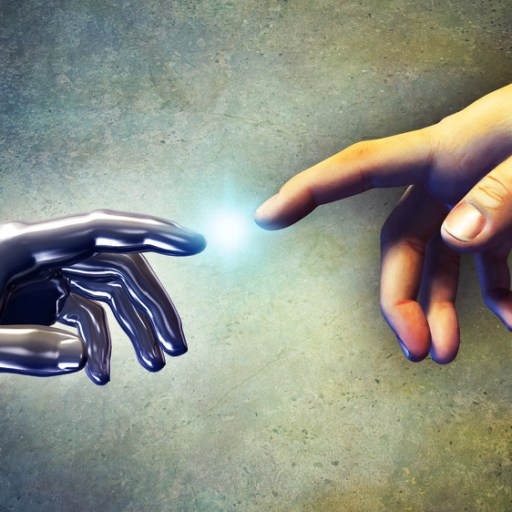
At what point does a robot become so lifelike that it becomes a human? And vice-versa, at what point does a human with robotic enhancements no longer become a human?
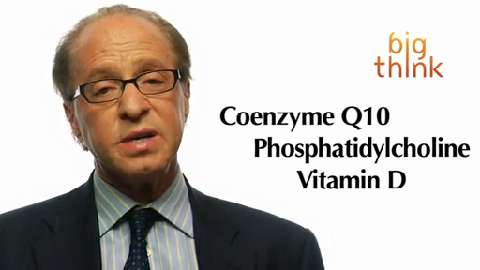
If you can survive for 34 more years, you have a good shot at living forever, says futurist Ray Kurzweil. Here are his three favorite dietary supplements that will make […]
1mins
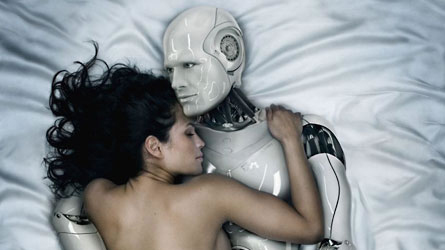
Once humans and machines merge—in 2045, according to Kurzweil—reproduction will no longer be a biological necessity. So why and how will we continue to have sex?
1mins
With the world’s knowledge at their fingertips, students no longer need to be spoon-fed facts, but they do need to develop a thirst for knowledge and the ability to learn […]
5mins
The coming biotechnology revolution will allow us, in the next 15 to 20 years, to reprogram our genes to resist both aging and disease. By mid-century, we may all be […]
5mins
Futurist Ray Kurzweil discusses how robotic red blood cells will aid in ending disease as we know it.
3mins
The true promise of nanotechnology, says Ray Kurzweil, is that “we’ll be able to create just about anything we need in the physical world from information files with very inexpensive […]
1mins
Ray Kurzweil says set high standards and try to meet them, plus be your own worst critic
1mins
Futurist Ray Kurzweil on preparing for the Singularity.
4mins
Futurist Ray Kurzweil assesses the current state of virtual reality before predicting how everything will change in the coming decades.
7mins
By 2045, we’ll have expanded the intelligence of our human machine civilization a billion fold. That will result in a technological singularity, a point beyond which it’s hard to imagine.