Search
Psychology
12mins
Members
The hospital where Rainn Wilson’s wife and son nearly died became his own personal holy site. There, he discovered that the sacred can exist in places we least expect it.
During his talk at A Night of Awe and Wonder, he explained how the awe we feel in moments of courage and love is moral beauty — and following it might be the start of our spiritual revolution.

2mins
“In most instances, ‘good enough’ is good enough.” A time management expert, a cognitive scientist, and a psychologist share their takes on productivity, perfectionism, and the harm of hustle culture.
Unlikely Collaborators
9mins
“There would be something very, very empty and meaningless about [a] sort of life with no problems.”

9mins
“The universe clicks along in perfect accord with the laws of physics forever.”

6mins
Daily habits can help you thrive or quietly turn into addictions. The difference is how your brain handles cues, routines, and rewards. Three experts explain how to work with your wiring instead of against it.
Unlikely Collaborators

2mins
Is gratitude to a deity different from gratitude to other people? Psychology and neuroscience professor Sarah Schnitker explains.

20mins
“It's certainly clear that the issues of boys and men haven't gone away in the last few years. If anything, they're getting even more attention, which is good when it's the right kind of attention.”
9mins
“The sexual excitation system is the accelerator or the gas pedal, and it notices all the sex-related information in the environment.”
2mins
A physician, a psychologist, and a mindfulness teacher explain what stress does to your body and mind, and how to use it to get smarter and stronger.
Unlikely Collaborators

2mins
Modern culture has made us feel like there’s no time to be patient. Sarah Schnitker’s lab at Baylor University is researching how this often-forgotten virtue could improve our overall well-being.
1hr 2mins
“There's research showing that people who are curious, who ask questions, are not just happier, they're not just more successful, they also live longer.”
3mins
Biologist Tyler Volk PhD, psychiatrist Bruce Greyson MD, and palliative care physician BJ Miller MD, reveal how confronting mortality can improve the way we live.
Unlikely Collaborators

1hr 37mins
“A lot of the trends in the economy, in family life have just been much harder for working class men.”
7mins
A neuroscientist, a psychologist, and a psychotherapist discuss how emotions are stories built from old experiences.
Unlikely Collaborators
2mins
Happiness researchers Robert Waldinger MD, Tal Ben-Shahar PhD, and Peter Baumann explain why the happiest people aren’t happy all the time.
Unlikely Collaborators

6mins
Virtue is hard to attain, and that’s the point. Sarah Schnitker explains why self-help shortcuts miss the mark.

1hr 26mins
“I like to say that physics is hard because physics is easy, by which I mean we actually think about physics as students.”

2mins
Many of us rely on emotional advice that doesn’t actually work. Psychologist Ethan Kross offers a smarter, science-backed approach to managing emotions with flexibility and perspective.
1hr 24mins
“There's a very pervasive belief that human nature is fundamentally selfish, but I know for a fact that that can't be true in part because my life was saved by a stranger a long time ago when I was 19.”
5mins
What happens when the boundaries of “you” disappear? James Fadiman, PhD, Jamie Wheal, and Matthew Johnson, PhD explore how supported experiences with psychoactive drugs can dissolve identity and reveal a deeper reality.
Unlikely Collaborators

6mins
“What did you win? You won awkward silence. You won their contempt. You won the first to apologize. When you win an argument, you will lose their confidence, you will lose their respect, you will lose the connection.”
17mins
“Anxiety is focused on things that are important to you in life. That is the key.”
7mins
Three doctors break down brain function, somatic awareness, and how to recover from bad experiences.
Unlikely Collaborators

7mins
From trepanning to lobotomies, humans have long struggled to manage emotion. Today, we have better tools. Psychologist Ethan Kross shares what actually works, and why.
1hr 3mins
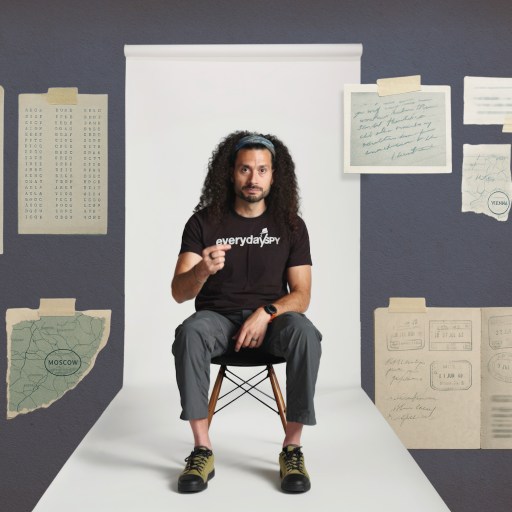
“The public really doesn't realize that they are much closer to CIA spies than they think they are.”
13mins
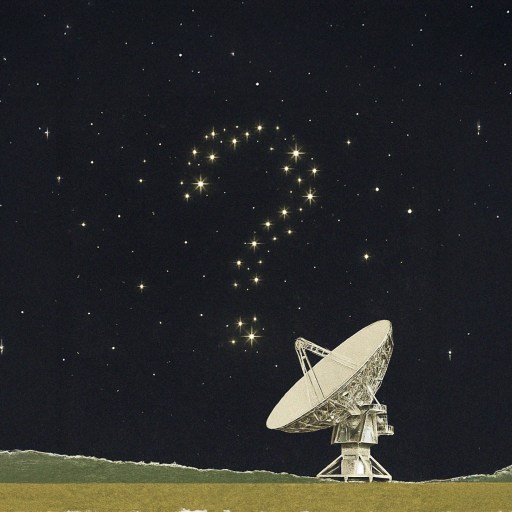
"We've sent out one or two little messages, but we certainly aren't investing billions of dollars shouting out into the cosmos saying, "Hey, we are here. Come say hi.""

1hr 25mins
"Virtually everything we're taught about sexuality for the first two decades of our lives is wrong."

16mins
“CIA classifies their secrets according to different terminology. There's confidential secrets, there are secret level secrets, and then there are top secret secrets. And the way that they define each of these different levels actually has to do with the impact that would occur if the secret became public knowledge.”
Why do we fall in love with one person over another? The late biological anthropologist Dr. Helen Fisher unpacks the evolutionary roots of romantic love, sex, and attachment. Using research […]