Space Exploration

Space Exploration

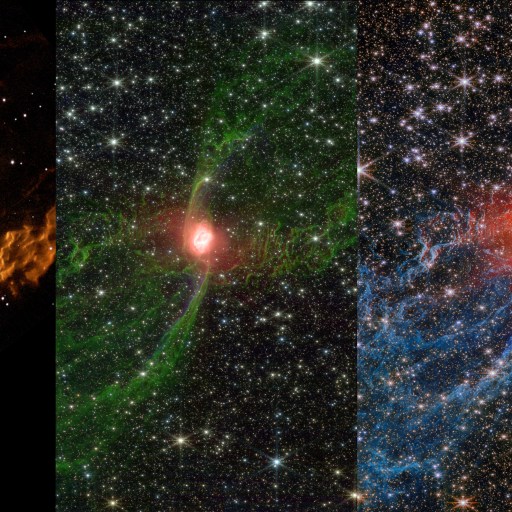
Three side-by-side images show different views of the Red Spider Nebula in space, captured by JWST, with a bright center and colorful gases in orange, green, and blue against a backdrop of stars.
When dying, Sun-like stars have binary companions, spectacular sights arise from the ionization. JWST spots the Red Spider Nebula in action!
ufo lights liverpool
Physicist Daniel Whiteson challenges the notion that all intelligent species would eventually uncover the same laws of nature. Do you agree?
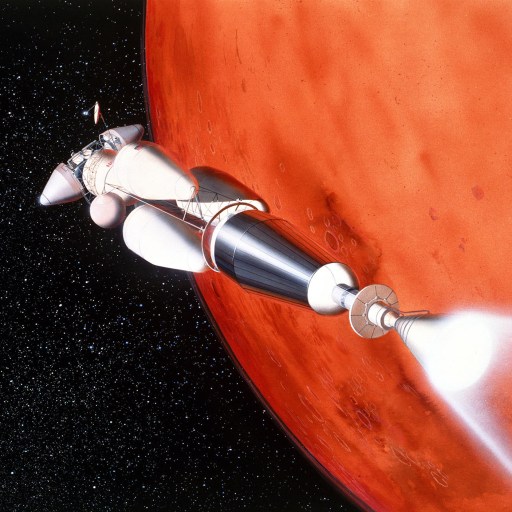
A spacecraft with bright engine exhaust approaches Mars, depicted with its reddish surface and a large crater visible.
"Think of it like a transcontinental railroad — not the fastest way to move a lot of mass, but certainly the most efficient,” Jared Isaacman said about nuclear electric propulsion.
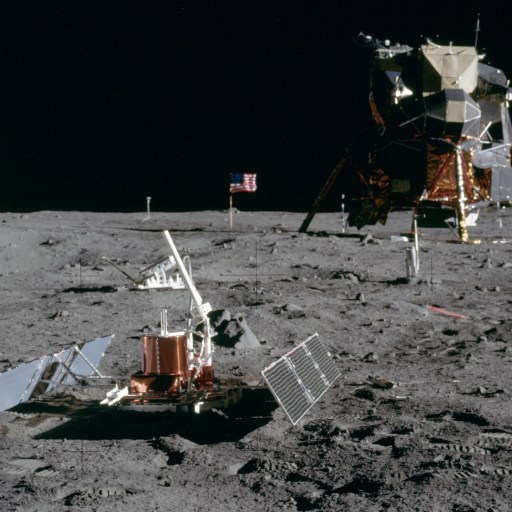
An astronaut stands proudly on the moon's surface near scientific equipment and a lunar lander, as the American flag waves in the background, symbolizing a pioneering USA nation.
As October begins, thousands of longtime NASA employees are leaving the agency. 4000+ will exit by January 9, 2026, changing NASA forever.
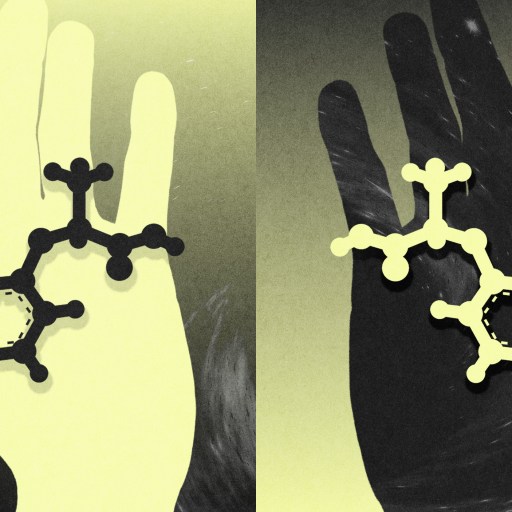
Two hands, one light and one dark, each holding a contrastingly colored molecular structure against a gradient background.
The fear of unleashing forces beyond control has haunted science for centuries.
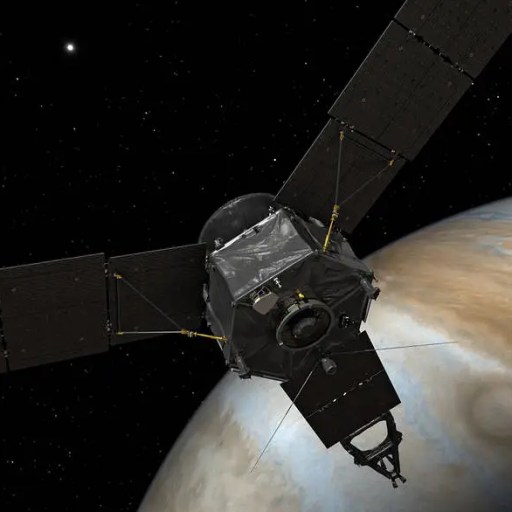
An artist's rendering of the nasa jupiter spacecraft.
The Juno spacecraft, orbiting and imaging Jupiter since 2016, is still succeeding. Without a further extension, the mission now faces death.
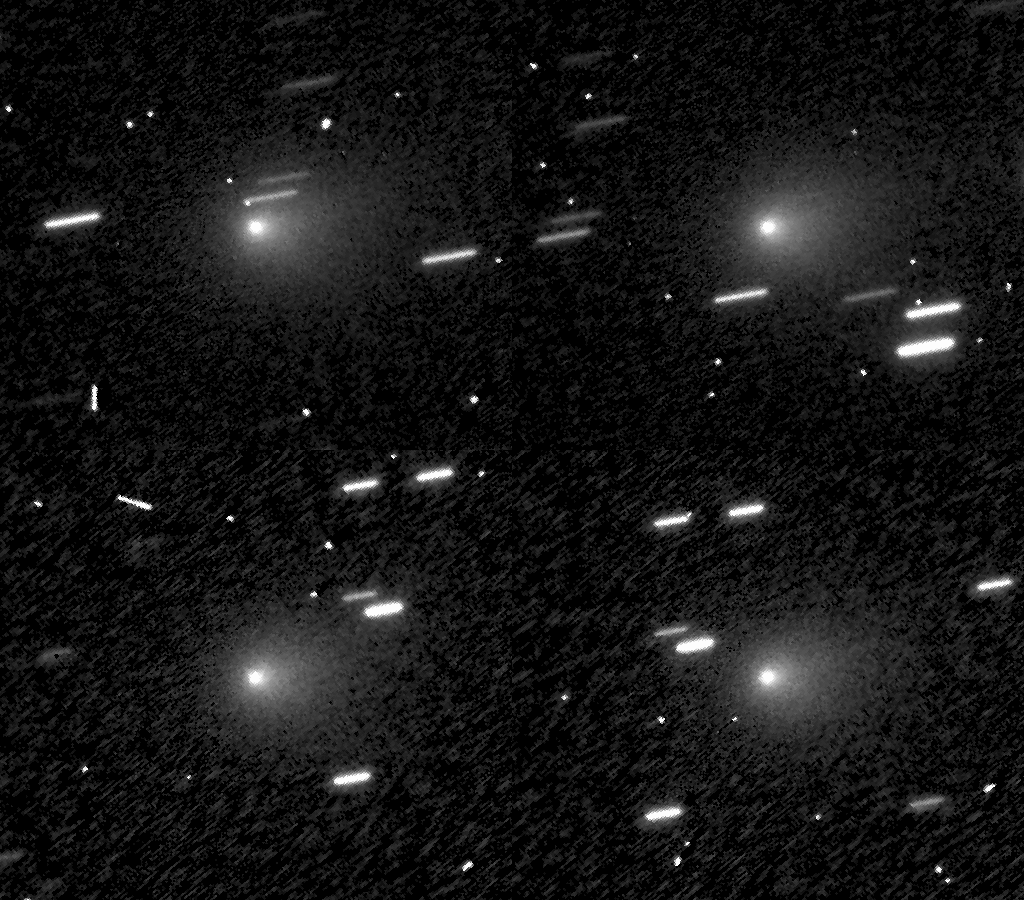
A grainy black and white image shows SPHEREx comet 3I/ATLAS gleaming at the center, surrounded by stars appearing as streaks due to long exposure.
Designed to map galaxies, the SPHEREx mission's first science result is instead about interstellar interloper 3I/ATLAS. No, it's not aliens.
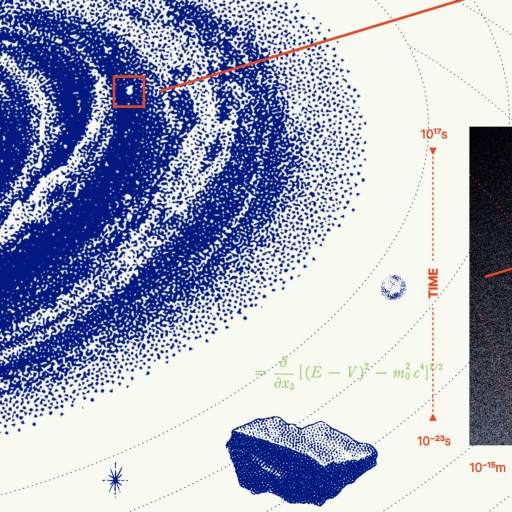
Diagram showing a galaxy, zooming in to highlight a small area labeled "Human Experience" within a grid mapping time and space on logarithmic scales.
Science helps us imagine the vastness of space and time — and our small but meaningful place within it.
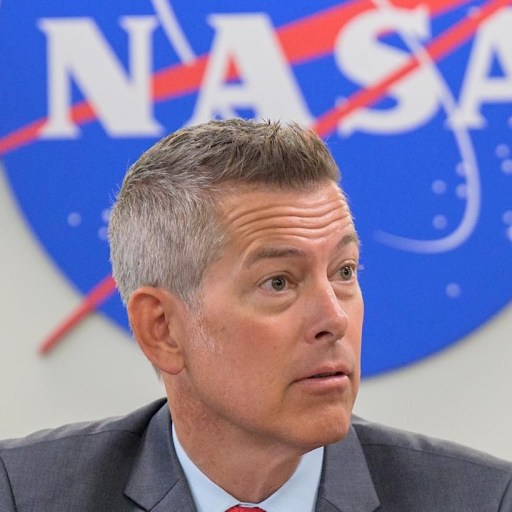
A man in a suit sits in front of a large NASA logo sign, symbolizing the determination to defy charter limits and push the boundaries of space exploration.
NASA's 1958 charter's top priority was, "the expansion of human knowledge of phenomena in the atmosphere and space." Is this how it ends?

Three white smokestacks emit thick, swirling clouds of orange and white smoke against a black background, hinting at the dramatic effect of going nuclear.
Nuclear chemist Tim Gregory joins Big Think to make the case that nuclear energy can still transform the world for the better.
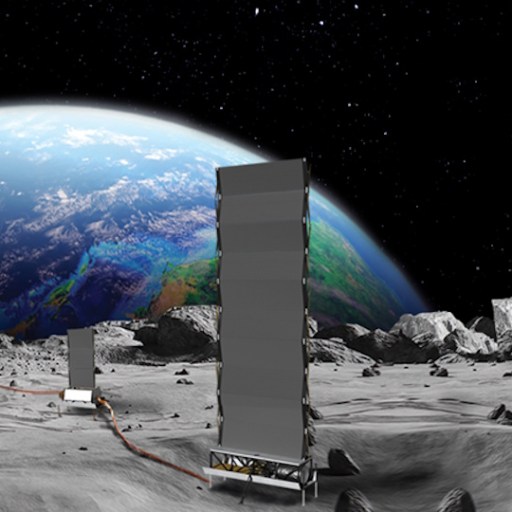
Two tall, rectangular scientific instruments, including a NASA nuclear reactor prototype, stand on the rocky lunar surface with Earth visible in the background against the blackness of space.
There are real concerns with long-term power generation on the Moon; nuclear could be the answer. But for NASA, will the cost be too high?
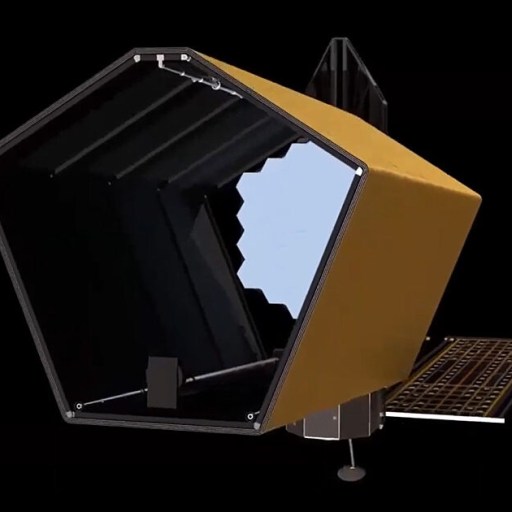
A hexagonal telescope with a gold exterior and an open, black interior is shown against a black background, highlighting NASA habitable worlds observatory science.
At the end of July, hundreds of scientists convened to plan NASA's upcoming astrophysics flagship mission. Will the US allow it to happen?
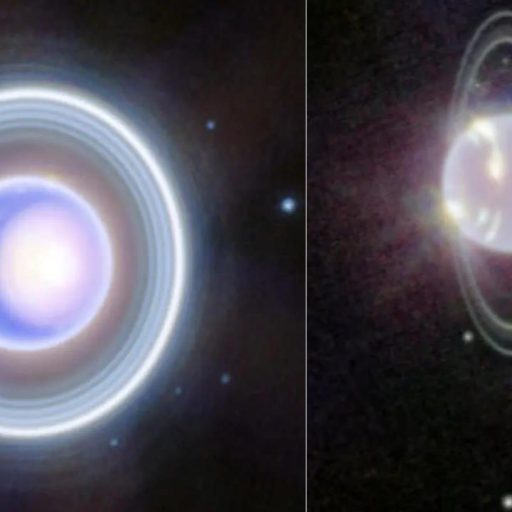
Images show the planet Uranus. The left image highlights its bright rings, while the right image, captured by the James Webb Space Telescope, depicts surprising details of glowing rings and a cloudy atmosphere. Discover more wonders in our solar system with these stunning visuals.
Once every 12 years, Earth, Jupiter, Uranus, and Neptune all line up, opening a window for a joint mission. Our next chance arrives in 2034.
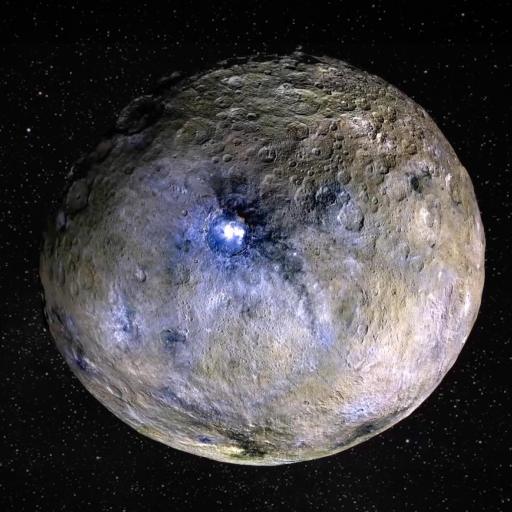
A cratered, spherical celestial body with a bright spot on its surface floats in dark outer space dotted with stars.
As the closest icy ocean world to Earth, Ceres may be a promising candidate in the search for signs of ancient life.