Explanations for the cosmic speed limit often conflate mass with inertia.
Physicist Don Lincoln explains why mathematics is a powerful tool for scientific modeling, but is not a science itself.
Despite no experimental evidence showing that gravitons exist, they remain a respectable concept in the world of professional physicists.
A recent measurement has simultaneously settled an ongoing scientific debate while puzzling scientists.

DESI has allowed astronomers to create an unprecedented 3D map of the Universe representing 20% of the entire sky.

"A person’s mass is made not of 'stuff' in the way we normally think about it, but rather our mass is made of energy."
The race to find dark matter could grow more complex with high-energy neutrino interference.
Why hasn’t matter fallen apart over billions of years? The mystery might start with protons.
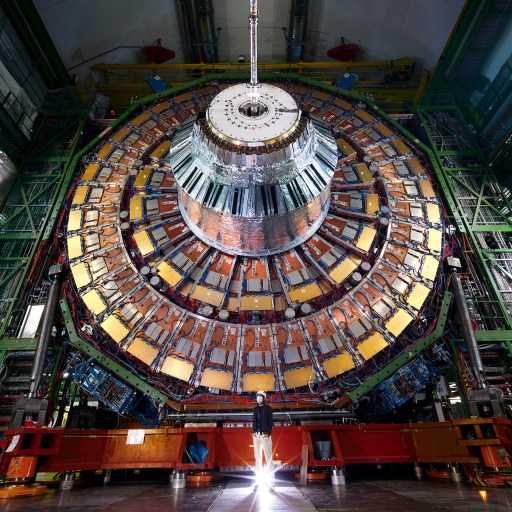
CERN scientists achieved record-breaking accuracy in mapping the mass of a key particle in the Standard Model.
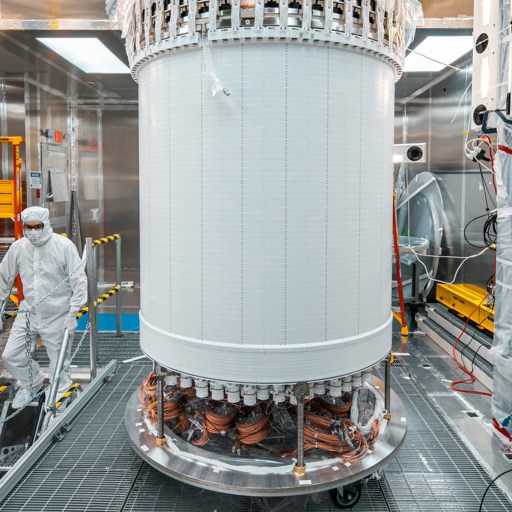
A recent experiment challenges the leading dark matter theory and hints at new directions for uncovering one of the Universe's biggest mysteries.
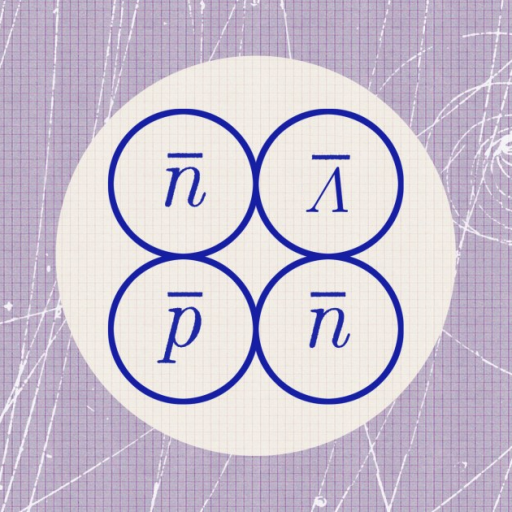
Researchers at the Brookhaven National Laboratory recently created the heaviest exotic antimatter hypernucleus ever observed.

DUNE is designed to detect the Universe's most antisocial particle: the neutrino.
Quarks and leptons are the smallest known subatomic particles. Does the Standard Model allow for an even smaller layer of matter to exist?
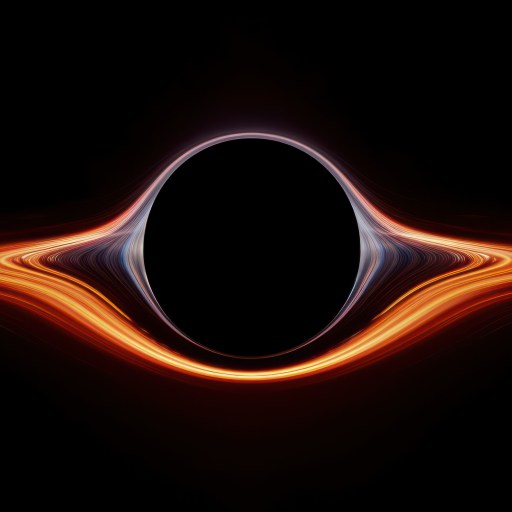
A recent paper in the journal Physical Review Letters claims to prove that a "kugelblitz" is not possible.
The properties of a ghostly particle called a neutrino are coming into focus.
The evolution of quantum technology is far from over.
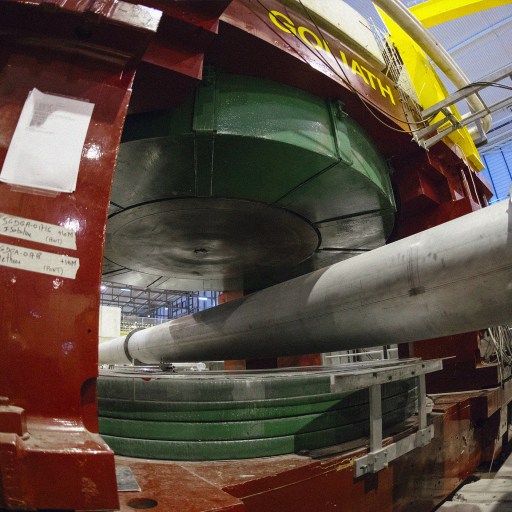
CERN's NA64 experiment used a high-energy muon beam technique to advance the elusive search for dark matter, offering new hope for solving one of astronomy's greatest mysteries.
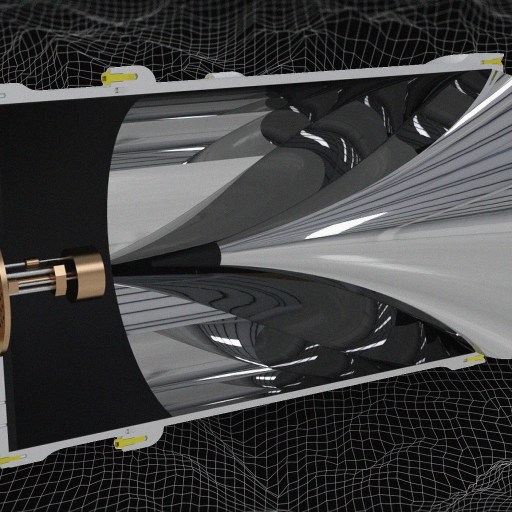
Scientists are searching for dark matter particles that are trillions or even quadrillion times lighter than the more traditional searches.

IceCube scientists have detected high-energy tau neutrinos from deep space, suggesting that neutrino transformations occur not only in lab experiments but also over cosmic distances.

The JWST's observations of well-developed galaxies early in universal history may coincide with accepted astronomical theory after all.