Jonny Thomson

Jonny Thomson

Jonny Thomson taught philosophy in Oxford for more than a decade before turning to writing full-time. He’s a columnist at Big Think and is the award-winning, bestselling author of three books that have been translated into 22 languages.

Jonny is also the founder of Mini Philosophy, a social network of around two million curious, intelligent minds. He's known all over the world for making philosophy accessible, relatable, and fun. 

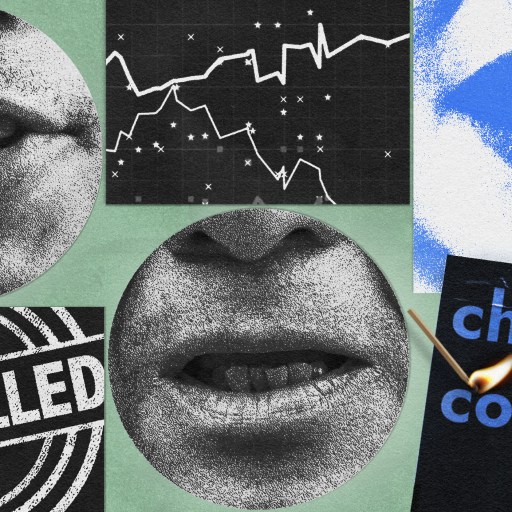
Collage featuring mouths, graphs, and text elements: a bold "CANCELLED" stamp, line graphs indicating a tipping point, and "change coming," all set against the backdrop of a striking matchstick.
In his latest book, Malcolm Gladwell explores a strange phenomenon of group dynamics.
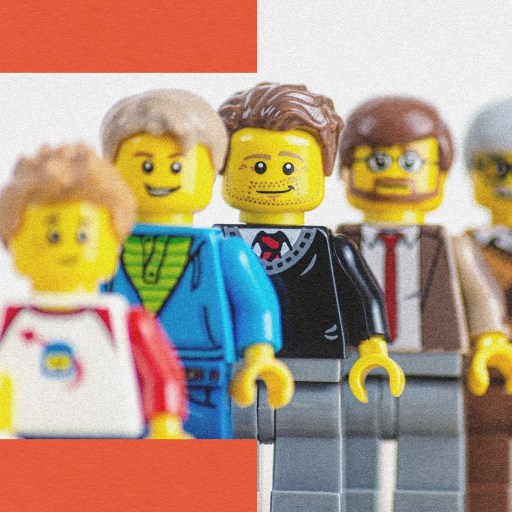
Five Lego minifigures standing in a line, each with distinct facial expressions and clothing, against a split white and orange background.
Reading this article would be such a millennial thing to do.
Two men in suits sit at a table looking stressed; one leans back with his head tilted upwards, and the other covers his face with his hand. The scene hints at the consequences of relying on the McNamara fallacy. A blurred glass pitcher is visible in the foreground.
Don't make the mistake of blindly following quantitative metrics — whether you're helping clients or looking for lunch.

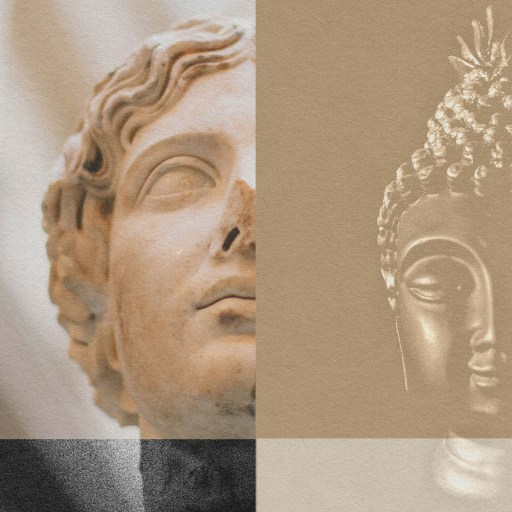
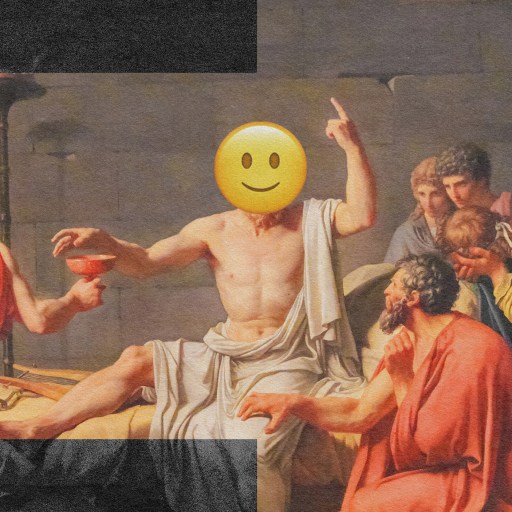
A composite image featuring a classical Greco-Roman statue embodying stoicism on the left and a Buddha statue symbolizing Buddhism on the right, overlaid with beige, red, and gray geometric patterns.
People often say, "Let go," or, "Don't take things to heart." But where's the line with this philosophy?

Three versions of a buttercup flower: left is yellow in visible light, middle is pinkish in ultraviolet, and right is colorless in infrared—a glimpse into the diverse sensory umwelt surrounding us.
If you're out on a walk, you will see a different world than your dog, a bee, or an ant. Here are three reasons why that matters.
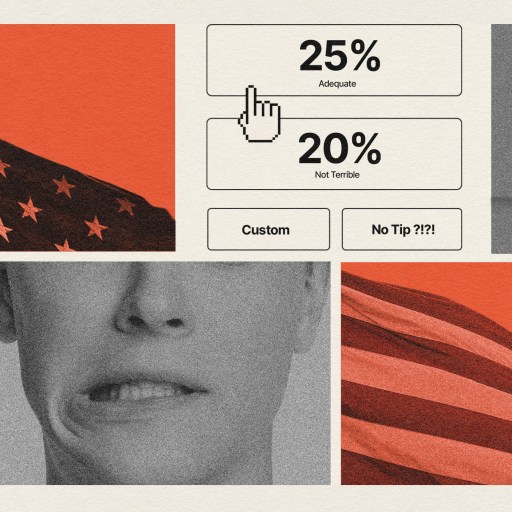
A collaged image featuring a partial American flag, a tip jar with coins, a percentage-tipping selection panel, a man's face making an awkward expression, and a close-up of striped fabric.
Why do we tip waitstaff and cabdrivers but not flight attendants and retail clerks?
Black and white photo of an American flag waving against a blurred background of buildings, framed by red and beige rectangular blocks.
In today’s political climate, how can we come together and seek some common ground or understanding? What are the mechanics of doing that? Is there some script or set of […]
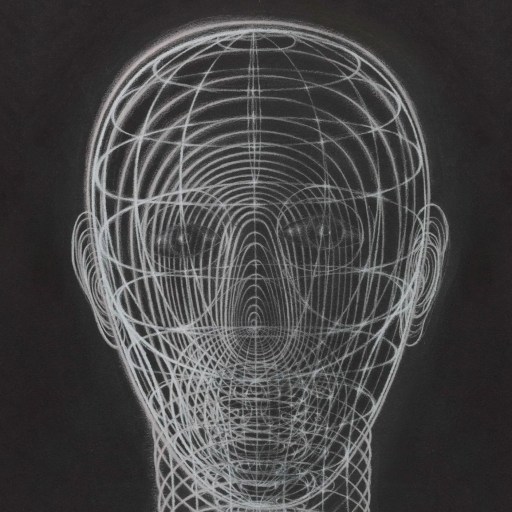
Three wireframe human heads are depicted against a dark background, their complex overlapping patterns evocative of the Johari window model, revealing multifaceted layers within each head's structure.
It's hard to know what other people know. But it's not impossible.

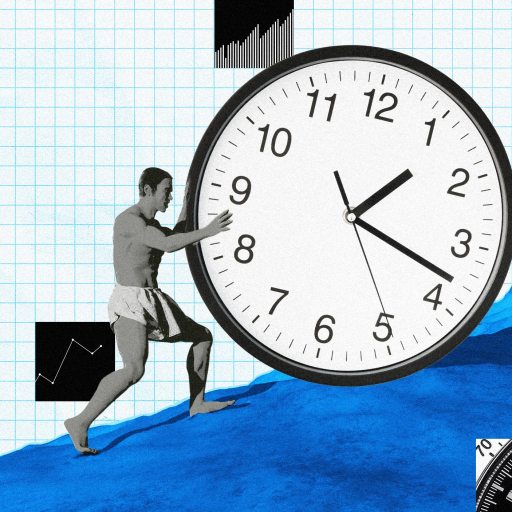
A person in minimal clothing pushes a large clock up a blue hill against a grid background with various numbers and graphs, embodying the diligence reminiscent of the Rule of Saint Benedict.
Oliver Burkeman — author of "Four Thousand Weeks: Time Management for Mortals" — tells Big Think about modern life lessons from a 6th-century monk.
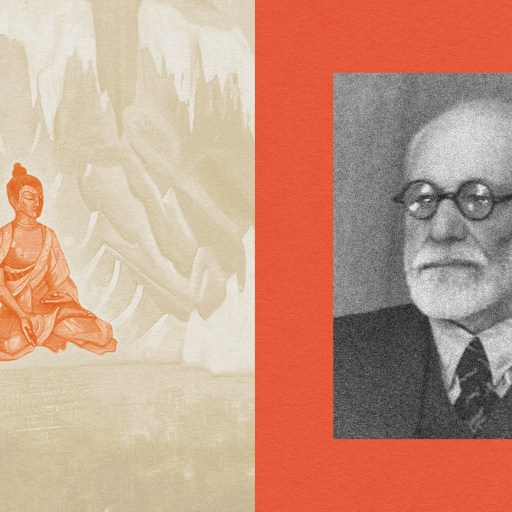
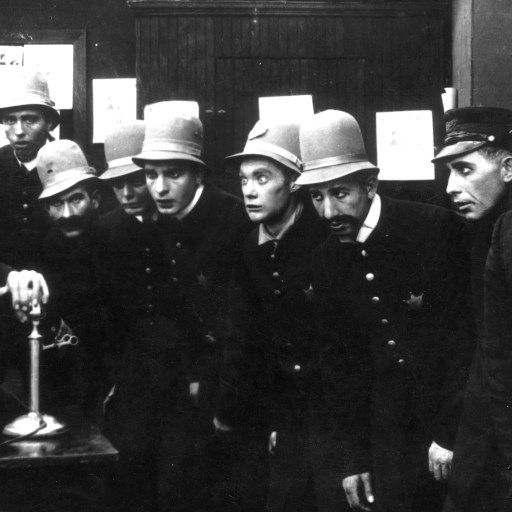
A group of vintage uniformed men, some wearing helmets, appear startled or curious while standing in what seems to be an office setting. The man on the left is speaking into a telephone, possibly exemplifying the Peter Principle as he manages the unexpected situation.
Why would someone who has spent their entire career following orders become a great leader overnight?
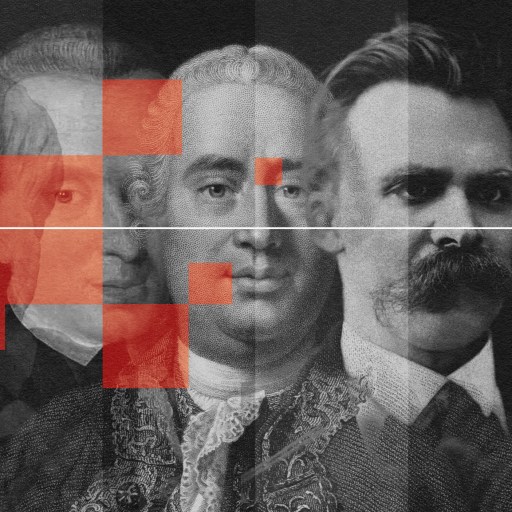
A montage of famous philosophers’ portraits next to a large question mark on the right, intersected by a horizontal arrow.
Philosophy cures no disease and invents nothing new. What's even the point?

A stainless steel razor blade in the shape of an open book against a blue background. The razor's edges form the outline of the book's pages.
Some news is slow, some news is fast — and there are two simple techniques to help you filter both.
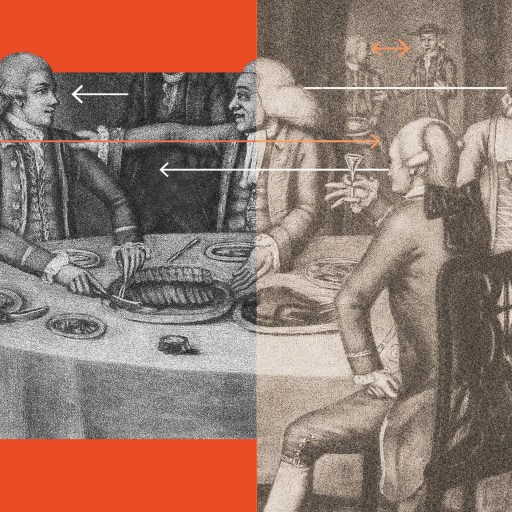
Black and white illustration of people in 18th-century attire at a dining table, overlaid with red-orange borders and white arrows indicating interaction among the individuals.
If philosophers really enjoy one thing, it’s a good debate — but not an argument.

An individual in a suit and orange tie gestures toward a firefighter in full uniform and helmet labeled "BUFFALO" with the number "27", as if acknowledging everyday miracles.
Is it ever possible for God to violate the laws of nature?
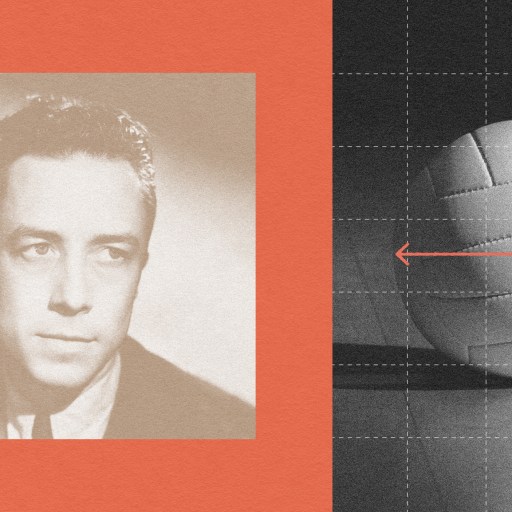
A photograph of a Albert Camus on the left and an illustration of a volleyball with arrows indicating its dimensions on the right, set against a dual-colored red and gray background, evokes a sense of alienation.
How do you cope when joining a team shatters your confidence? Albert Camus and Harry Stack Sullivan can help.
A green die showing two and a gray die showing five are placed on a gray surface, perhaps hinting at a stroke of luck.
Unraveling the subtle mechanics of luck can help us better steer the wheel of fortune.