Search
Stephen Johnson
Executive Editor, Big Think

Stephen Johnson is Executive Editor at Big Think. His writing has appeared in PBS, U.S. News & World Report, and newspapers and magazines across the Midwest. He lives in St. Louis.
Read Less

The program aims to notify people after they've come in close contact with someone who tested positive.

Currently, more than 100 COVID-19 vaccines are being developed worldwide.

The Demo-2 mission represents a new era for American spaceflight.

When facing a hard decision, consider choosing change over inaction.

Why do so many people report encounters with seemingly similar entities after taking DMT?
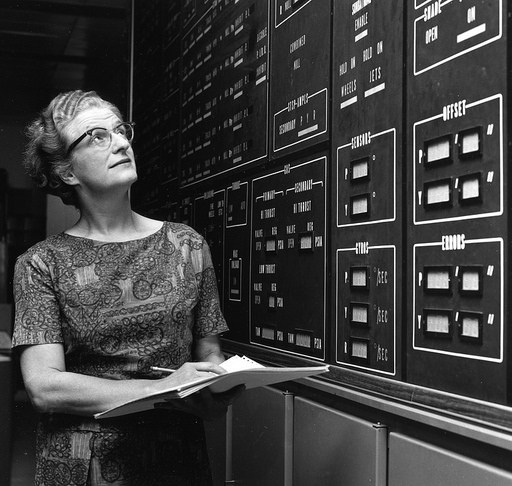
The Roman Space Telescope will study the expansion of the universe and search for distant planets.

Why do some people still believe that behavior is caused solely by genes or environment? A new paper offers some answers.

In the near future, most unemployed Americans will have access to government-subsidized programs. But that's set to change in 2021.

What makes some psychopaths better able to control their antisocial tendencies?

Health care professionals worldwide are facing a second crisis, the consequences of which we're only beginning to understand.

Here's what the world's space agencies hope to learn about the Red planet.

The 57-year-old is teaming up with NASA and SpaceX for the film project, which is to be set aboard the International Space Station.
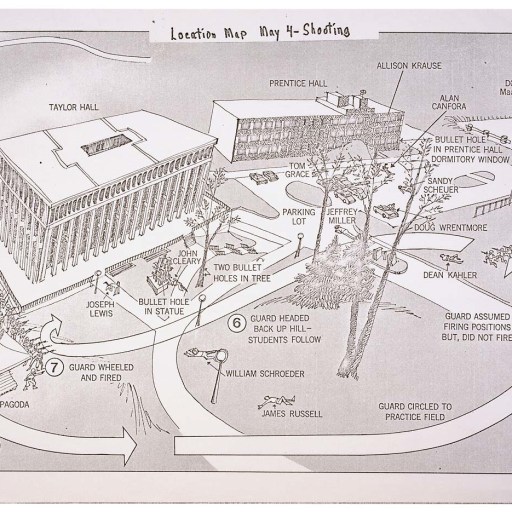
On May 4, 1970, the National Guard shot and killed four students during an anti-war protest. The massacre went on to change American culture forever.

An antibody produced by llamas seems particularly effective at neutralizing a key protein of the novel coronavirus.

It's likely the most complete skeleton that's ever been discovered of the strange Gondwanatheria mammal group, which roamed the ancient supercontinent of Gondwana alongside dinosaurs.

The coronavirus pandemic offers online education companies a chance to prove themselves.

A bipartisan group of economists, technology and public health experts, and ethicists developed a three-part plan to swiftly and safely reopen the American economy. Could it work?

The system can even be designed to send alerts to employees when they've come too close to a coworker.

A new study on rats suggests that using marijuana as an adolescent "reprograms the initial behavioral, molecular, and epigenetic response to cocaine."
AutoML-Zero is a proof-of-concept project that suggests the future of machine learning may be machine-created algorithms.