Search
Stephen Johnson
Executive Editor, Big Think

Stephen Johnson is Executive Editor at Big Think. His writing has appeared in PBS, U.S. News & World Report, and newspapers and magazines across the Midwest. He lives in St. Louis.
Read Less

Spending time in green spaces seems to yield many health benefits, most of which researchers are only beginning to understand.

The patient's second infection was asymptomatic, suggesting that subsequent infections may be milder.

The system is basically facial recognition technology, but for cars.

Why do Black newborns have a relatively high mortality rate in the U.S. — and how does the race of the doctor factor in?

The finding is remarkably similar to the Dunning-Kruger effect, which describes how incompetent people tend to overestimate their own competency.

Scientists are seeking ways to safely connect computers to the brain.

The immune system seems able to "remember" the coronavirus, and therefore able to prevent — or minimize the severity of — reinfection.

A study published Friday tested how well 14 commonly available face masks blocked the emission of respiratory droplets as people were speaking.
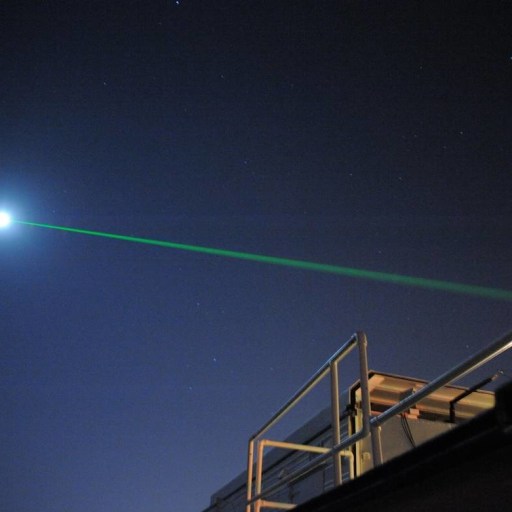
After a decade of failed attempts, scientists successfully bounced photons off of a reflector aboard the Lunar Reconnaissance Orbiter, some 240,000 miles from Earth.

A report from the New York Times raises questions over how the teletherapy startup Talkspace handles user data.

So far, 30 student teams have entered the Indy Autonomous Challenge, scheduled for October 2021.

Is focusing solely on body mass index the best way for doctor to frame obesity?

In a recent study, researchers examined how Christian nationalism is affecting the U.S. response to the COVID-19 pandemic.

A recent analysis of a 76-million-year-old Centrosaurus apertus fibula confirmed that dinosaurs suffered from cancer, too.

A recent study tested how well the fungi species Cladosporium sphaerospermum blocked cosmic radiation aboard the International Space Station.

Big brains come at a big cost, however.
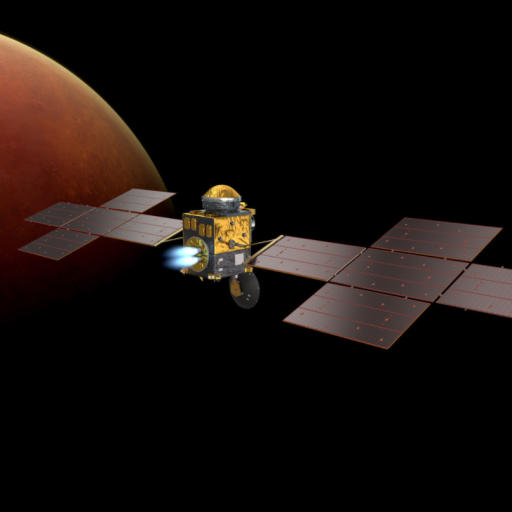
The Earth Return Orbiter is part of a long-term mission to search for ancient alien life on Mars.

A new study explores how wearing a face mask affects the error rates of popular facial recognition algorithms.

A new report from The New York Times describes a Pentagon task force's long-standing project to collect data on unidentified aerial phenomena and a Pentagon consultant who says the U.S. has collected crashed "off-world vehicles."

The impact might have triggered the Ice Age.