Search
Stephen Johnson
Executive Editor, Big Think

Stephen Johnson is Executive Editor at Big Think. His writing has appeared in PBS, U.S. News & World Report, and newspapers and magazines across the Midwest. He lives in St. Louis.
Read Less

A brief passage from a recent UN report describes what could be the first-known case of an autonomous weapon, powered by artificial intelligence, killing in the battlefield.

Buildings don't have to be permanent — modular construction can make them modifiable and relocatable.

Too few babies — not overpopulation — is likely to be a major problem this century.

As droughts threaten water supplies across the planet, some municipalities aim to utilize an untapped resource: sewage water.

Some wild animals thrive near humans, but only up to a point.

Science journals may be lowering their standards to publish studies with eye-grabbing — but probably incorrect — results.

Can the main psychoactive ingredient of magic mushrooms help treat the world's sixth most debilitating illness?

Political partisanship might be a treatable condition.

Since 1957, the world's space agencies have been polluting the space above us with countless pieces of junk, threatening our technological infrastructure and ability to venture deeper into space.

A new study explores how investors' behavior is affected by participating in online communities, like Reddit's WallStreetBets.

A new study used functional near-infrared spectroscopy (fNIRS) to measure brain activity as inexperienced and experienced soccer players took penalty kicks.

A team of scientists managed to install onto a smartphone a spectrometer that's capable of identifying specific molecules — with cheap parts you can buy online.
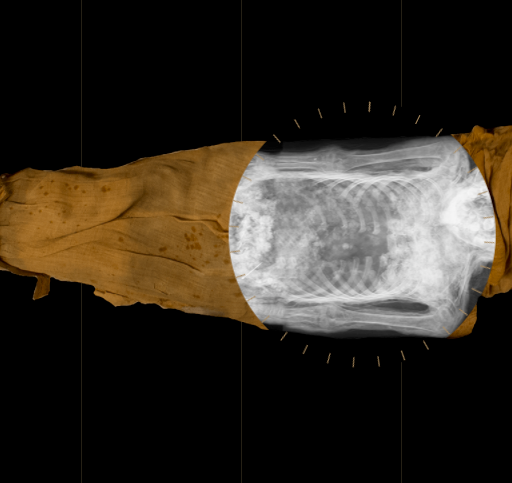
The mummy was first thought to be a male priest. But a recent radiological analysis revealed a surprising anomaly.

Scientists have long puzzled over how Mars, a cold and dry planet, was once warm enough to support liquid water.

Cannabidiol (CBD) seems to reduce the unpleasantness of pain, a finding that surprised the researchers behind a new, first-of-its-kind study.

The answer seems to be a series of evolutionary trade-offs that help protect organs in women, according to a recent study.

A recent study used fMRI to compare the brains of psychopathic criminals with a group of 100 well-functioning individuals, finding striking similarities.

A recent study of Iceland's Krafla volcanic caldera suggests hidden magma pools may be lurking under many of the world's volcanic systems.

The 'Monkeydactyl' was a flying reptile that evolved highly specialized adaptations in the Mesozoic Era.
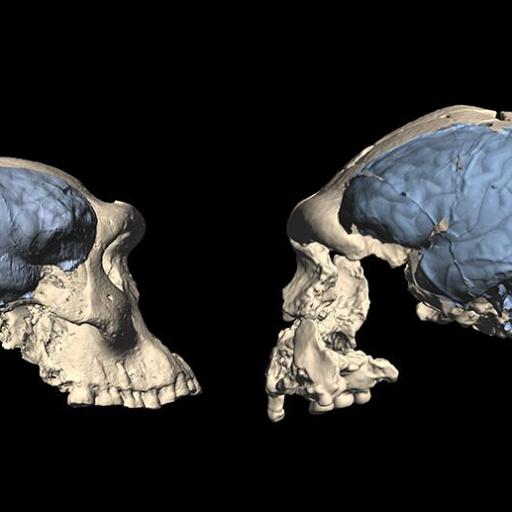
A recent study analyzed the skulls of early Homo species to learn more about the evolution of primate brains.