Search
Stephen Johnson
Executive Editor, Big Think

Stephen Johnson is Executive Editor at Big Think. His writing has appeared in PBS, U.S. News & World Report, and newspapers and magazines across the Midwest. He lives in St. Louis.
Read Less

Satellite imagery can help better predict volcanic eruptions by monitoring changes in surface temperature near volcanoes.
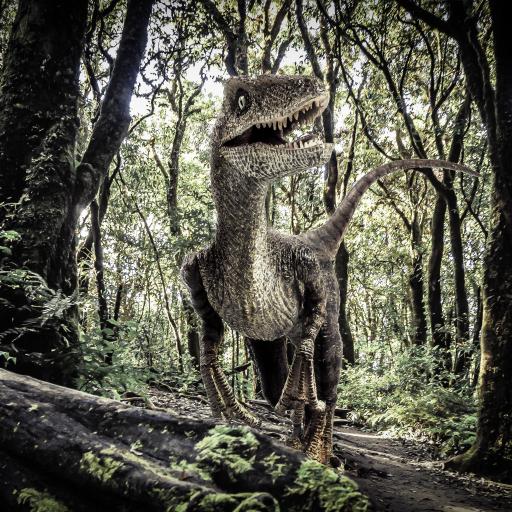
The lush biodiversity of South America's rainforests is rooted in one of the most cataclysmic events that ever struck Earth.

Fifty years of research on children's toy preferences shows that kids generally prefer toys oriented toward their own gender.

The uptick in Arctic lightning could cause more wildfires, potentially triggering a feedback loop that releases massive amounts of carbon into the atmosphere.

New research reveals that the face can affect the shape of the brain through a complex "cross-talk" between the two structures.
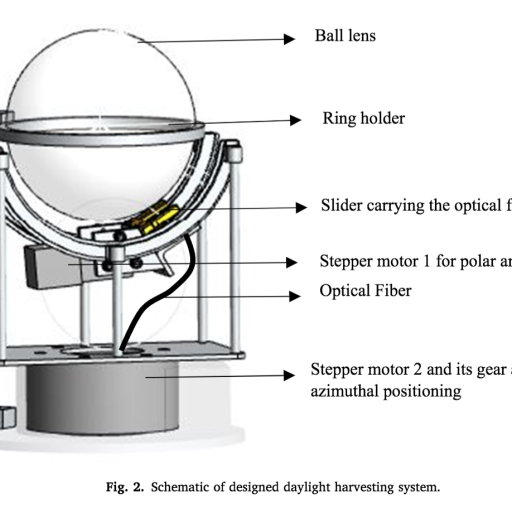
Researchers in Singapore invented a novel device that may help the island nation illuminate its growing underground infrastructure.

Snakes and mammals share common genetic building blocks necessary for producing venom.

The Field Medal was created to elevate promising mathematicians from underrepresented demographics. But has it followed through on that goal?

The conventional wisdom may be wrong. Consulting Google for information about medical symptoms might not be as counterproductive as commonly thought, new research suggests.

What's to blame for the recent uptick in containership accidents?

Humans are more likely to have "first contact" with an advanced alien civilization, according to a recent NASA-funded paper.

A new study explores how using positive labels to describe a majority group may negative impact perceptions of minority groups.

Sound waves behave quite differently on Mars than on Earth.
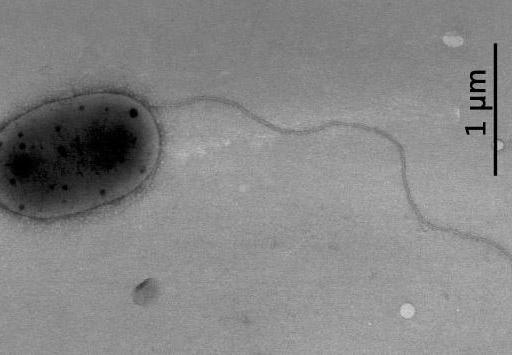
The discovery could help astronauts find better ways to grow food in space.

Ultrasound might be able to damage the novel coronavirus in the same way an opera singer's voice can shatter a wine glass.

Creating an afterlife—or a simulation of one—would take vast amounts of energy. Some scientists think the best way to capture that energy is by building megastructures around stars.

"Large-scale indiscriminate killing is a horror that is not just a feature of the modern and historic periods, but was also a significant process in pre-state societies," the researchers wrote.

The bizarre discovery could pave the way for advances in regenerative medicine for humans.

Using machine-learning technology, the genealogy company My Heritage enables users to animate static images of their relatives.

What happens when simulation theory becomes more than a fascinating thought experiment?